Private equity has become an increasingly attractive destination for finance leaders. Executive search firm Heidrick & Struggles recently found CFOs at U.S.-based private equity-backed companies earned an average of $604,000 in cash compensation in 2025, up 5% from the previous year.
Many also expect equity awards worth between $3.5 million and $7.1 million by the time their companies are sold.
However, alongside these expectations, private equity firms are asking more of finance chiefs. Holding periods have stretched, operational improvement has become a greater focus than topline growth and CFOs are expected to help drive performance over a longer investment period.
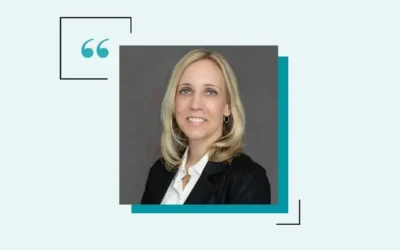
For Jim Buckle, CFO of privately held meal-kit company Gousto, which is backed by a mix of private equity and growth investors and recently announced plans to consolidate production as part of a cost-cutting effort, those trends make one piece of career advice more relevant than ever.
“I think the first thing is [to] think about the size and shape of [the] organization that you enjoy being in,” Buckle said during an apperance last week on a podcast by Stoix, an London-based executive search firm. “I would think about that before [the] ownership structure.”
Buckle has spent nearly four decades working across large public companies, venture-backed startups and private equity-owned businesses. His work history includes finance leadership roles at Dell, LoveFilm, Wiggle and Feelunique before joining Gousto in 2020. On the podcast, Buckle offered a simple piece of advice for aspiring CFOs considering private equity-backed companies.
“Don’t go into private equity just because you think you’re going to make a ton of money out of it,” Buckle said. “I don’t know what the stats are, but how many people actually walk away with a multimillion-pound check at the end of it? Probably not that many.”
Choose the business before the ownership
Buckle said he believes finance professionals should focus first on the type of business that fits the way they like to work before they think about the structure that backs the business itself.
“If you want to be in the action and involved in the decision-making, setting the strategy of a business and doing those types of things, then don’t work in a large corporate [structure],” he said. “If you want a relatively safe career and a nice structure that you can go up the ladder over time, then a large [corporation] is for you.”
As his career progressed, Buckle said he deliberately moved into smaller companies. At LoveFilm, he helped oversee the business as it grew into Europe’s largest online DVD rental service before transitioning into streaming and eventually being acquired by Amazon. He later served as CFO of private equity-backed cycling retailer Wiggle and COO of beauty retailer Feelunique, another PE-backed company later acquired by Sephora.
“You’ve got more mature businesses like Gousto,” he said. “It’s kind of a relatively mature business and you’ve probably got the best of being in a growth business but also some of the elements of being in a [corporation] as well.”
He said finance leaders should first determine the type of environment where they will thrive and the types of businesses they enjoy operating in. Once they understand that, evaluating ownership’s impact becomes much easier.
Don’t count on the payday
Private equity compensation packages have become increasingly attractive. According to the Heidrick & Struggles data, longer holding periods have encouraged finance leaders to negotiate higher cash compensation while still pursuing equity participation. Many CFOs surveyed expect multimillion-dollar payouts when their companies eventually exit.
“I’ve certainly over the course of my career had some kind of equity return a few times,” Buckle said. “But I’ve also had more experiences of things where you think you’re going to make a load of money and you don’t.”
“When I went to work at Dell, partly I went there because it was a great experience, different to the BBC,” Buckle recalled. “It was an awful place to work culturally. I sort of consoled myself with the fact that Dell’s stock price was going up by one or two dollars every day for the first year or so that I went there. Then it completely crashed and I made no money whatsoever.”
He explained how this was a costly but valuable learning lesson for him. “This was a real learning for me,” he said. “[To] think about the organization and the culture and the people before the money because the money may never happen.”
His comments arrive as private equity firms continue adapting to changing market conditions. Recent research from Alvarez & Marsal found operational transformation accounted for more than half of EBITDA growth among European private equity portfolio companies that exited in 2025.
Firms are relying on more than just revenue growth alone and placing greater emphasis on improving performance throughout the holding period. Buckle said those industry shifts make it even more important for finance leaders to enjoy the work itself rather than focusing on a future liquidity event that may arrive later than expected.
Find the environment where you’ll thrive
The more important consideration, Buckle said, is the stage of the business and the type of work that comes with it. He recalled working at a pre-revenue startup with about 15 employees, where the finance function effectively consisted of one person.
“You’re doing everything from posting invoices to talking about investment with your investors and kind of worrying about the business’s future,” he said.
Some finance leaders enjoy that breadth, while others prefer larger organizations with more specialized roles. Buckle said understanding which environment suits you is far more valuable than focusing on who owns the company.
That lesson became particularly clear while he was hiring commercial staff at Feelunique. Many candidates came from large retailers such as Debenhams and Boots, telling interviewers they wanted a business that was more dynamic and moved faster. Some settled into that environment quickly, though others discovered they missed the structure they had left behind.
“They would always say in the interview process, ‘I want to work somewhere more dynamic and a bit more fast moving,’” Buckle said. “Some of those would thrive on that. Others would go and after a few months, you realized they didn’t really want it that fast-paced or that chaotic.”
Those experiences now shape how Buckle approaches hiring, including two of his favorite interview questions: “What do you enjoy doing at work?” and “What don’t you enjoy doing at work?”
He said the answers often reveal whether someone is likely to succeed in a fast-growing business, though Buckle acknowledges there are limits to any interview process. “You can’t really be sure that someone’s going to sink or swim in a particular environment,” he said.
He explained how the same philosophy applies to careers more broadly. “You’ve got to try stuff,” Buckle said. “No career is perfect. You’re not going to start at 21 or whatever and kind of go to 65 and everything’s going to be plain sailing… You almost need to make some mistakes and find things you don’t like because if you don’t find the things you don’t like, you won’t know what you will like.”