The rise of the dual role of CFO and COO, colloquially known as COFO, has become more common among companies of all sizes. As CFOs take on broader responsibilities spanning operations and strategy, many CFOs today are wondering how they can go about preparing themselves to hold both the CFO and COO titles.
For Hasbro CFO and COO Gina Goetter, the answer starts with rejecting the idea that the jobs are separate. Drawing on lessons from a 20-year career at General Mills, divisional CFO roles at Tyson Foods and her tenure as CFO of Harley-Davidson, Goetter argues that finance and operations have always been deeply connected because every operating decision ultimately carries a financial consequence.
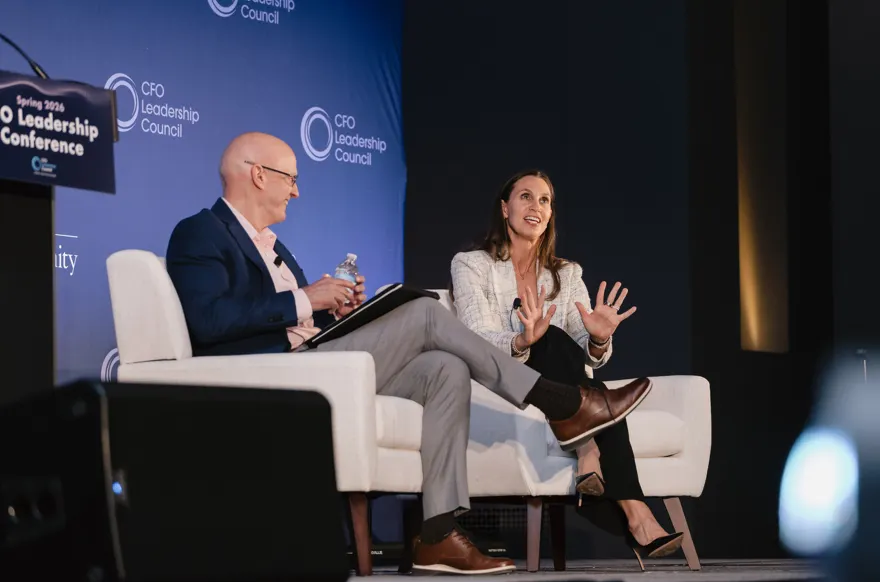
In a conversation with CFO.com earlier this month at the CFO Leadership Council’s annual conference in Boston, Goetter discussed why she views the CFO and COO roles as one integrated function, how she develops future finance leaders and why judgment and critical thinking will remain essential even as artificial intelligence reshapes parts of the finance profession.
Gina Goetter
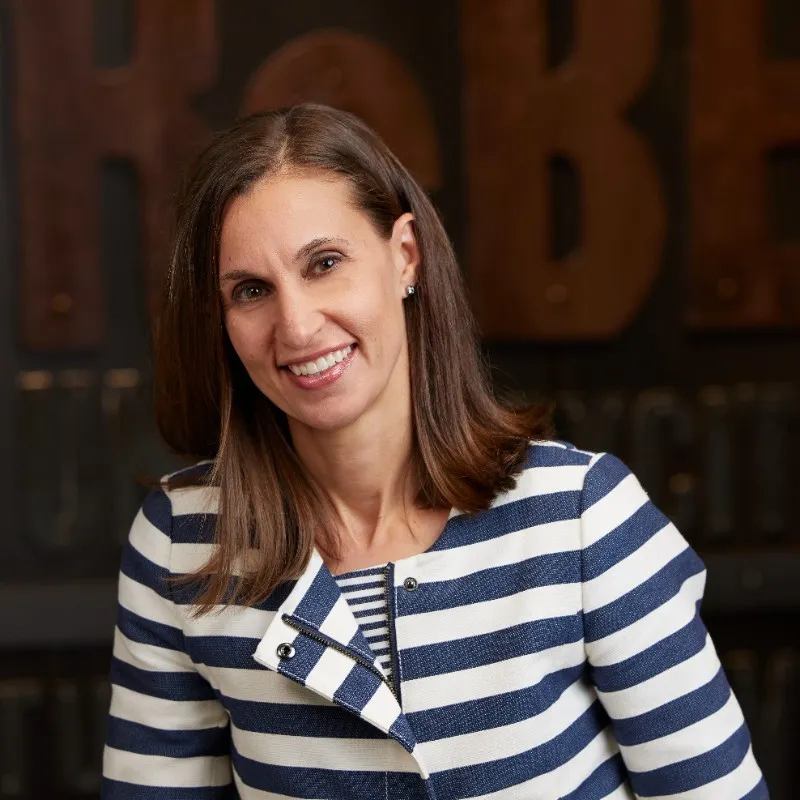
Executive Vice President, CFO, COO, Hasbro
First CFO Position: 2019
Notable previous employers:
- Harley-Davidson Motor Company
- Tyson Foods
- General Mills
This interview has been edited for brevity and clarity.
ADAM ZAKI: You are one of a growing number of finance leaders carrying both CFO and COO responsibilities. There’s a lot of interest in the idea of a COFO role among readers. How do you approach the role?
GINA GOETTER: I think a lot of it has to do with how I was raised from a career standpoint. I grew up at General Mills for 20 years, and we didn’t have COOs. That was really the role of finance, to get in there and sit side by side with the business alongside the operation, forming business decisions because every operating decision has a financial outcome. It’s ending up somewhere on your financial statements, whether it’s the P&L or the balance sheet.
I see it as totally seamless. It’s not like I walk into the office one day and say today I’m going to be the COO, and tomorrow I’m going to be the CFO. It’s very fluid.
To your point on the team, there is a zero probability that I, in my role, can make every decision every day. It is about having really good leaders in place who can run a lot of the blocking and tackling on the day-to-day. I have a chief supply chain officer, I have a head of technology and, of course, I have all my finance disciplines.
We operate as one leadership team, so I don’t have separate leadership meetings with my finance team separate from these other functions. We operate as one function. We call ourselves the finance, operations and technology function, and we see our job as making sure the backbone of the company is operating as efficiently and effectively as possible. We are here to enable the business. Our role, with this operations mindset, is how do we keep staying ahead of the business, allowing us to see around corners and keep the day-to-day moving ahead and creating impact.
You mentioned you started your career at General Mills. Many people I’ve interviewed who have worked there describe it as one of those academy companies. What lessons from that experience have stayed with you?
I love General Mills. I spent 20 years there. They have a very set way of bringing people into the company. I came in with a class, and there was a set expectation of the different experiences and rotations you were going to get as you moved through the company.
It wasn’t like some employers, where you come in and say, ‘My job is X, and I do X until I figure out how to get myself to Y.’ At General Mills, it was, ‘Here’s your first job. You’re going to have it for six months, and then we’re going to rotate you to something totally different.’ Then, a year later, you’re rotated again.
By the time I left General Mills, I think I had 12 different experiences, and I had been there for 20 years. Some of them were fast. Early in your career, you’re trying to gain as much breadth as you can, but you’re taking all of those tools and putting them into your toolkit as you go on to the next thing.
That rotational mindset and developing talent thoughtfully is something that I’ve tried to bring with me. I brought it to Harley-Davidson, and I’m bringing it here. Very few people sitting in my chair have had just one job or one discipline.
I think if my job as a leader is to develop talent, I need to create those experiences across the organization.
What responsibility do finance leaders have in developing talent at a time when AI may automate some of the traditional entry-level work?
I certainly think my role is to develop the next CFO, or to develop CFOs.
I had the great fortune while I was at General Mills that the CFO I worked for also really believed in developing people and giving folks new experiences. I think of my class, and maybe the class above me and the class after me, and there are probably seven or eight of us now who have all been public-company CFOs. That’s remarkable when you think about it because we all started within a four- or five-year period.
I don’t know that he would ever say it is one of his great legacies, but it is certainly one that I’ve always admired. We didn’t all end up as CFOs at General Mills, but he enabled us to develop in a way that allowed us to go be CFOs elsewhere.
When you get to the point where I’m at in my career, it is my responsibility to make sure we’ve got options. If I win the lottery, who can step in behind me?
Even as people are coming in the door at Hasbro, how are we making sure that they’re coming here for a career and not a job? That’s a very different distinction in my mind.
Coming here for a career means asking what variety of experiences someone can get. Sometimes that means leaving the company. I actually had a gentleman who worked for me at Harley-Davidson. I brought him to work for me here, and he was [excellent]. He did an amazing job, and he got the chief accounting officer role at a publicly traded company.
I’m thrilled for him. Miserable for myself, but so proud and thrilled that this talent that I cultivated for all these years is now able to go out and live his aspiration and his dream. I actually do think it is a huge part of my job.
If you were 30 years old today and starting your career, how would you approach it differently because of AI?
I wouldn’t. I hear that AI is going to come in and replace some of the entry-level work, but what AI is not able to do is judgment and critical thinking. It can give you some good frameworks, but without experience, you could go AI amok and go down a path you shouldn’t.
I think my experience partnering alongside AI is what creates the value. The calculus is different. Folks coming out of school are not going to have to spend hours and hours building [discounted cash flow] models. That’s going to be super easy. What they do with that DCF model is what is actually going to create the value. The information and how they influence decisions is what creates the value.
I think the work just looks a little different. Some of the pieces that you would toil away on in spreadsheets are absolutely going to get easier, but it should free us up to work on the things that drive more value for the business.
One of the things I talk about with finance is how much of what we do our business partners would actually say is value-added. Truly value-added. Truly moves the dial on the business.
No one is ever going to say closing the books every month moves my business forward. It’s a necessary evil. You have to do it. But if you can find a way to do that simpler and easier, it frees up the capacity of your people to do higher-level things.
People don’t go to school to learn how to pay an invoice or approve an invoice. Yet a lot of entry-level finance and accounting roles spend time doing exactly that type of lower-level work because somebody has to do it, and there have to be controls and governance along the way.
I think AI can free us to really take what we were trained for, what we went to school for and all the experiences we have, and use them to impact the business.
Hasbro has a massive portfolio of intellectual property. What role does finance play in managing and protecting that IP?
As a partner to the business, yes, finance plays a role, but we have a whole team of people outside of finance that actually protect our IP and make sure it’s going in all the right spots and doing all the right things.
The work of asking whether we should partner with a particular IP holder or what we’re going to charge for our IP, absolutely, my finance team is working alongside our licensing and entertainment team to craft whatever business models need to support that usage.
Yesterday, we announced the launch of Sixth Wall, which is our new AI studio within Hasbro. It spun up about a year ago. The whole focus of that studio is getting our IP ready for an AI world, making sure we can control the ways our characters are going to show up as the AI world continues to evolve.
Finance plays a role in those different business-model iterations, not necessarily the protection of the IP itself.
Your customers’ interests and the toy industry have both changed so much over recent years. What is the biggest brand under Hasbro today?
“Magic: The Gathering” by far.
It is well over a billion dollars at this point. It’s our biggest brand, it’s our most profitable brand and it is one of our strongest fandoms.
Then you’ve got brands like Monopoly. That’s another juggernaut. What’s interesting is that with Monopoly, you’ve got the physical game itself, and then you have the digital iterations of it. Monopoly Go is a great example of IP. We licensed our IP to Scopely, which developed that game.
Throughout your career, when you’ve met someone and immediately thought, “Wow, this person has it,” what is the “it” to you?
I am always drawn to authenticity. Maybe it’s because of where my own personality sits. A little bit of charisma, a little bit of humility. Folks who walk the walk and talk the talk. People who do what they say. High integrity. Those are always the types of individuals I’ve been drawn to.
I approach my work with a little bit of humor. I can be snarky sometimes, so I love partnering and working with people who can have fun while we’re working as well. I think that blend of people who know their stuff and have high-value systems are the ones I’ve always gravitated toward.