Labor decisions inside finance organizations heading into 2026 are being shaped by sustained pressure to limit hiring, rising expectations for finance leadership and the growing use of automation across core workflows. As a result, CFOs are making workforce decisions in an environment that emphasizes efficiency, judgment and adaptability, often without the option of expanding headcount.
Across enterprise, midmarket and growth-stage companies, finance teams are being reconfigured to support increasingly complex businesses with fewer people. At the same time, the CFO role itself continues to absorb responsibility across strategy, risk management, technology adoption and organizational leadership. Together, those shifts are redefining how finance labor is structured, how teams develop talent and how CFOs think about their own roles.
Finance teams are scaling through leverage
As CFOs plan for 2026, experts say many are operating from the assumption that finance teams must scale through leverage rather than hiring. That approach has pushed leaders to rethink processes, eliminate manual work and invest selectively in systems that reduce routine effort.
Dean Quiambao, partner at consulting firm Armanino, said he is seeing finance teams operate at sizes that would have been difficult to sustain just a few years ago. “I’m thinking of a company right now that’s about a $100 million business, and they’re running finance with two people,” Quiambao said. “That only works because they’ve been very intentional about their tech stack and about stripping out manual work.”

Quiambao also added that the CFOs making this model work are not just asking fewer people to do more. Instead, they are redesigning how work gets done and creating room for experimentation.
“The mindset is different,” he said. “They’re asking, ‘What is a process we can automate or eliminate?’ and they’re creating space for the team to test that, instead of saying, ‘We’re too busy.’”
That focus has changed hiring priorities. Some say roles centered on transactional reporting are becoming less common, while positions tied to analysis, planning and business partnership are gaining prominence.
When asked about the balance between labor and automation, Jack McCullough, president of the CFO Leadership Council, said automation has moved from a temporary efficiency initiative to a permanent feature of most finance organizations.

“Once something is automated, it’s not coming back,” McCullough said. “The expectation now is that finance teams are spending their time interpreting information and exercising judgment.” As a result, he said, finance organizations are becoming flatter, reporting cycles are tightening and CFOs are becoming more directly involved in how work flows through their teams.
Talent development is replacing hiring as the primary labor strategy
With external hiring constrained, CFOs are increasingly focused on developing talent internally. Upskilling, reskilling and internal mobility are becoming central to finance labor strategies heading into 2026. Nick Araco Jr., founder and CEO of the CFO Alliance, said many CFOs are rethinking what qualifies someone for a role in finance.
“It’s less about where someone started and more about whether they can grow into what finance needs next.”

Nick Araco Jr.
CEO and founder, CFO Alliance

“I keep hearing CFOs say, ‘I just want smart, intellectually curious people, and I can train them,’” Araco said. “Then they realize, maybe those people are already inside the organization.” That shift is changing both hiring profiles and career paths. CFOs, Araco explained, are placing greater emphasis on adaptability, learning ability and comfort working across systems, rather than insisting on traditional accounting backgrounds for every role.
“There’s a lot of unpacking happening around soft skills and technology skills at the same time,” Araco said. “It’s less about where someone started and more about whether they can grow into what finance needs next.”
The pressure to rethink hiring criteria is also being driven by structural changes in the accounting labor market itself. Calvin Harris Jr., CEO of the New York State Society of Certified Public Accountants, the governing body of New York State’s certified public accountants, said CFOs are contending with a shrinking pool of traditionally credentialed accounting talent as states revisit long-standing CPA licensure requirements.
“For a lot of CFOs, the question isn’t, ‘Do I want to change how I hire?’” Harris said. “It’s, ‘Do I even have a choice?’”
“If CFOs want a sustainable finance workforce, they have to be willing to develop people, not just screen them.”
Calvin Harris Jr.
CEO, NYCPA
Harris said fewer candidates are moving through conventional CPA pipelines at the same time that demand for financial insight, planning and judgment continues to grow. In response, some states, including New York, have begun experimenting with alternative pathways to licensure, a shift that is already influencing how CFOs think about qualifications inside their teams.
“We’re seeing CFOs ask, ‘What skills do I actually need, and which ones can I teach?’” Harris said. “Judgment, curiosity and adaptability are becoming more important because the old model doesn’t scale anymore.”
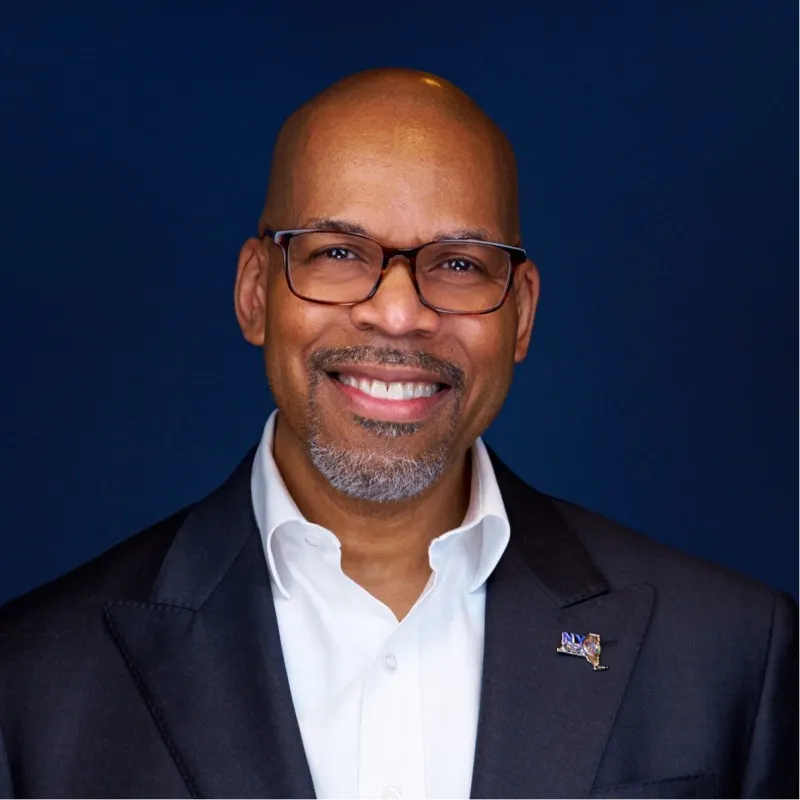
That shift has reinforced the need to develop talent internally. Harris detailed how current labor dynamics are forcing CFOs to redeploy employees from adjacent functions, creating non-linear career paths. Though this creates opportunity, it requires leaders to invest more intentionally in training rather than relying solely on external hiring.
“If CFOs want a sustainable finance workforce, they have to be willing to develop people, not just screen them,” Harris said.
Compensation and staffing models are adjusting alongside skill expectations
As finance leaders rethink hiring and development, compensation structures are evolving as well. Lauren Dillard, CFO of the data collaboration platform LiveRamp, said companies are reassessing how equity fits into total compensation, particularly in more mature technology businesses.

“I think the role of stock comp as a percentage of total compensation has shifted and will continue to shift,” Dillard said. “Shareholders increasingly view it as a real economic expense, and companies are being forced to be more targeted and performance-oriented in how they use it.”
Dillard said that reassessment is influencing how finance leaders think about attracting and retaining talent, especially as teams become smaller and expectations increase. “That’s something we look at very carefully when we benchmark compensation,” she said. “It directly affects how competitive we are in the market and how we reward performance.”
Staffing flexibility is also becoming a bigger part of the labor conversation. Jason Hershman, founder of Point, a fractional CFO service for sports businesses, said more companies are turning to alternative staffing models to manage complexity without committing to permanent headcount increases.
“What I’m seeing is companies using fractional or specialized finance talent to handle complexity as it arises,” Hershman said. “It gives them access to experience without locking themselves into a fixed structure.”

Hershman explained how that approach is particularly attractive as finance responsibilities expand into areas like systems implementation, contract complexity and scenario planning. “A lot of the complexity finance teams are dealing with now doesn’t show up evenly over time,” he said. “It spikes around specific moments, system changes, contracts, capital decisions, and then it recedes.”
With this context, he said solutions to labor demands among finance teams need to be made or adjusted based on demand. “Businesses still need high-level finance judgment,” Hershman said. “They’re just being more flexible about how they access it.”
Automation is reshaping roles and raising leadership questions
As automation and AI tools become embedded across finance workflows, CFOs are also navigating the human implications of those changes. While efficiency gains are clear, decisions about roles and responsibilities are becoming more nuanced. McCullough said many CFOs are grappling with how to handle workforce changes tied to automation responsibly.
“There’s real uncertainty,” he said. “CFOs understand the efficiency gains, but they’re asking, ‘How do I do this ethically? How do I explain to someone that their role is being replaced by a system?’”
That uncertainty is shaping how CFOs approach automation initiatives. Rather than treating AI solely as a cost-reduction lever, many finance leaders are pairing technology deployment with communication, transition planning and reskilling. “Finance leaders are trying to balance progress with accountability,” said McCullough. “They’re very aware of the impact these decisions have on people.”
“CFOs are moving from being experts to being editor-in-chief of our workflows.”
Christina Ross
Founder and CEO, Cube

Christina Ross, a CFO turned CEO and founder of FP&A solutions provider Cube, said automation is also changing what finance leaders value most in their teams. As AI tools handle more technical and analytical tasks, Ross said CFOs are increasingly prioritizing judgment and discernment over pure expertise.
“CFOs are moving from being experts to being editor-in-chief of our workflows,” she said. “The tools can generate answers, but someone still has to decide what matters, how to interpret it and what the organization should do next.”
At the same time, those workflows continue to encompass more complexity as finance’s role grows throughout the business. Araco said many finance leaders are spending more time on forward-looking analysis, risk assessment and strategic decision support than on traditional oversight of historical reporting.
“They’re doing the FP&A, they’re pressure-testing assumptions and they’re helping the business think through what’s coming next,” Araco said.
Quiambao shared a similar sentiment, but added that CFOs who can operate effectively in that environment are increasingly central to enterprise value creation. “The CFO sits at the intersection of data, strategy and execution,” Quiambao said. “If you can move quickly, communicate clearly and support decisions with clean data, that has a real impact on the business.”
As finance organizations head into 2026, labor decisions are about reshaping how work gets done. According to the experts, most CFOs are prioritizing leverage over headcount, development over hiring and judgment over process volume. Those choices are redefining their own finance careers, team structures and the scope of the CFO role itself.