Few companies experienced a bigger pandemic boom-and-bust cycle than Wayfair.
After demand for home furnishings surged during COVID-19, the online retailer has spent several years restructuring its operations as sales slowed, mortgage rates climbed, supply chains shifted and a sluggish housing market weighed on discretionary spending.
More recently, the company has seen some of its efforts pay off, and is pursuing new growth avenues like opening large-format physical stores and launching a paid membership program as it looks to reengage customers and diversify beyond its e-commerce roots.
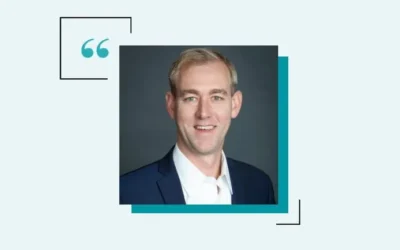
When speaking during a fireside chat at a recent CFO Leadership Council event, CFO Kate Gulliver offered an optimistic assessment of the challenges facing the home goods sector and her company alike. She argued that Wayfair’s sluggish bounceback post-pandemic has resulted in a leaner organization with faster decision-making processes that she believes has positioned the company for similar success it saw prior to her moving up to the CFO and chief accounting officer role in 2022.
Smaller teams, faster execution
Gulliver said one of the biggest lessons to emerge from Wayfair’s restructuring efforts is that smaller teams often operate more effectively than larger organizations built during periods of rapid growth.
“We learned through the restructuring that, frankly, a small team gets a lot more done,” Gulliver said.
Wayfair reduced headcount through multiple rounds of layoffs as pandemic-era demand faded and the company worked to improve profitability. During the discussion, Gulliver described those decisions as difficult for leaders and employees alike. She acknowledged the emotional toll that restructuring can have on organizations while arguing that the resulting changes improved execution.
Workforce reductions are “the hardest things that I think most leaders ever take their teams through,” she said, adding that during such periods “people are in tears, and leadership is devastated.”
She admitted that despite the emotional toll layoffs impose on morale, she finds that leaner teams communicate more effectively, solve problems faster and make decisions with greater clarity. She said that focus on simplicity is company-wide, both in how leaders structure teams and how they set goals.
One example is compensation. Rather than tying employees to numerous departmental metrics, Gulliver said Wayfair focuses incentives around companywide objectives. The approach, she said, encourages collaboration across functions and reduces friction when priorities shift.
“We’re all actually incentivized on the ultimate same target,” she said. “We don’t have ‘optimal’ targets.”
The philosophy reflects a broader belief that organizational simplicity matters as much as strategy. Gulliver said companies often overcomplicate structures and reporting relationships when the real challenge is maintaining alignment around a common goal.
“I think we like to complicate things, and [that can be] 100 departments and 100 compensation plans. It’s not necessary,” she said.
Finance’s role in operations
Gulliver also described a finance function that looks increasingly embedded in operating decisions. She said strategic finance professionals at Wayfair work so closely with business leaders that it can be difficult to separate where finance responsibilities end and operational responsibilities begin. Teams collaborate in areas like pricing decisions, supply chain initiatives and business planning rather than getting stuck in isolated silos.
That approach extends into Wayfair’s logistics operations. Gulliver pointed to CastleGate, the company’s fulfillment and logistics platform, as an example of finance and operations working together. Teams jointly evaluate shipping costs, pricing decisions, address logistics questions and network capacity while balancing financial objectives with customer experience considerations.
Gulliver said it’s things like CastleGate that boards and CEOs increasingly expect CFOs to serve as strategic partners on rather than focusing primarily on the compliance and reporting responsibilities of an organizational project. “I do think that there has been a desire for boards and from CEOs to have a CFO be a partner,” she said.
The changing expectations also influence how her own finance talent is developed. Gulliver encouraged aspiring finance leaders to spend time outside traditional finance roles, arguing that operational experience creates a better understanding of what is realistically achievable inside a business.
Wayfair regularly moves employees into and out of finance roles, she said, exposing leaders to different functions across the organization. “I think that actually really helps develop the talent,” Gulliver said.
When talking about turnover at the company and how employee mobility impacts human capital, Gulliver, who served as global head of talent at Wayfair before her CFO role, said that rapid internal mobility is an organizational priority that does deter some people. “I would be very upfront [with an applicant] that if you come in thinking your job today is still your job 12 months from now, this is not the job for you.”
Limits of AI progress
While many panelists at the event were enthusiastic about artificial intelligence, Gulliver offered a more measured assessment of how the technology is being deployed inside large organizations like Wayfair.
She noted that her company has relied on machine learning models for years in areas such as pricing and forecasting. More recently, the company has expanded access to generative AI tools, including ChatGPT, Gemini and Claude, while experimenting with finance-specific applications.
Gulliver said some early use cases have produced tangible results, and she highlighted freight auditing as one example. Wayfair processes large volumes of shipping transactions and has billions of SKUs, creating opportunities for AI tools to identify discrepancies and automate work that previously required extensive manual review.
“It also makes a job more interesting to people,” she said, explaining that employees can focus on higher-value work instead of manually reviewing shipping scans and freight records.
At the same time, she said many organizations continue to encounter challenges around data quality. She described an internal chatbot initiative designed to answer employee questions about company policies, and the tool initially struggled because it pulled information from outdated documents and could not reliably distinguish between current guidance and older materials.
“We had to take it and sort of pull it back, recalibrate,” she said.
The experience reinforced a lesson that many finance leaders are discovering as AI adoption accelerates. While enthusiasm surrounding the technology remains high, extracting value often depends on the quality and consistency of underlying data.
I [sometimes feel] I can’t push on the team, and the team will remind me just how complicated it is to clean up the data,” Gulliver said.