Few environments test leadership like the military. Every decision has consequences, and success depends on clarity, accountability and trust. Retired Lieutenant Colonel Oakland McCulloch spent 23 years leading soldiers through those conditions.
A veteran of Operation Desert Storm, McCulloch later commanded humanitarian and peacekeeping missions in Bosnia, Kosovo and Central America before transitioning into civilian leadership roles, including a director’s position at the Bay Area Food Bank. Today, he speaks to companies and universities across the country about how military discipline and purpose-driven leadership apply to business.
In this conversation with CFO.com, recorded on Oct. 8 at the CFO Leadership Council’s Fall Conference in Austin, Texas, McCulloch discusses what CFOs can learn from military leadership, why communication matters more than rank, and how resilience, trust and accountability separate effective teams from average ones.
Oakland McCulloch
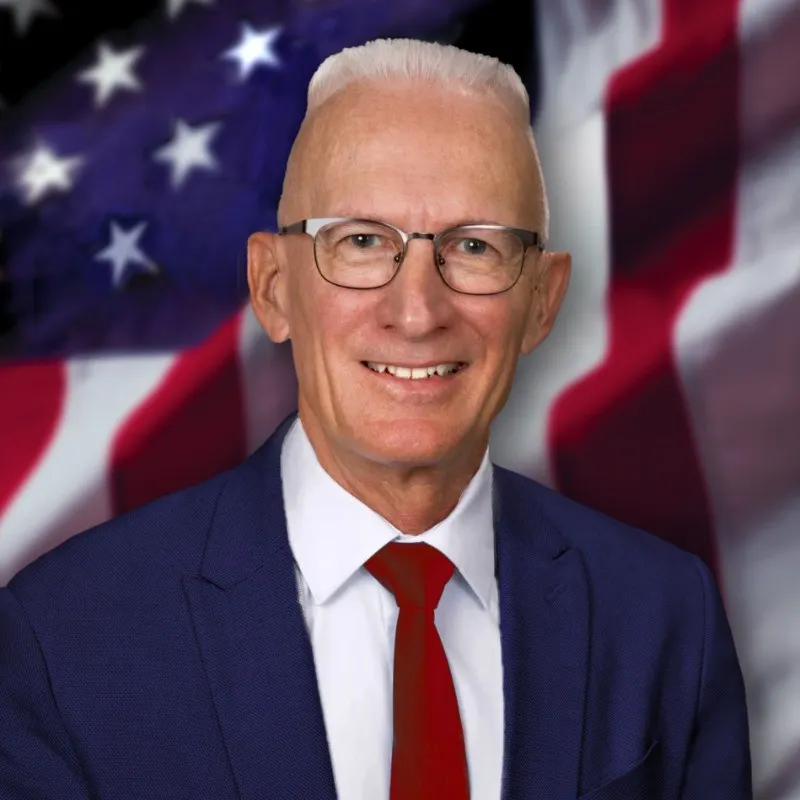
Retired Lieutenant Colonel, U.S. Army
Notable previous positions:
- Associate director, Bay Area Food Bank
- Member, Board of Advisors, Mend the Heart Foundation
This interview has been edited for brevity and clarity.
ADAM ZAKI: People often say transitioning from military leadership into the business world is extremely challenging. Why is that, and what separates those who thrive from those who don’t?
OAKLAND MCCULLOCH: Leaders who leave the Army and go into business often struggle when they can’t figure out that, although leadership is leadership, the principles don’t change. What made you successful in the military will make you successful in the civilian world. The difference is how you communicate and apply those principles.
I didn’t speak to the people at the Bay Area Food Bank the same way I spoke to my soldiers. I still communicated the same ideas, just differently. There’s no command structure in the civilian world, and that’s a big adjustment. Some people have a hard time giving up their rank and the authority that comes with it. They don’t realize that in the civilian world, you’re Oak, not Colonel McCulloch.
The Army’s transition process is better now. It’s a yearlong program that helps people think through scenarios before they get out. I didn’t go through that — it started after I left — but it’s one of the best ways to prepare people.
In the Army, you worked until the job was done. If that was five o’clock, fine. If it was ten o’clock, fine. At the food bank, we were preparing for our largest annual handout. Three weeks out, we were in a planning meeting and, at five o’clock, everyone started closing their notebooks. I said, “What are you doing?” They said, “It’s five o’clock, time to go home.” I said, “But we’re not done.”
So I told them, “If you want to leave, leave. But three weeks from now, when we’re handing out food and a 19-year-old single mother can’t feed her two-year-old daughter because we didn’t get this right, that’s on you.” How many people left? None.
That mindset shift is hard. In the military, we’re mission-focused. Sometimes five o’clock is the time to go, but other times it’s not. Even in the Army, when I kept my soldiers late, I’d tell them, “Don’t come in for PT tomorrow. Come in at eight instead of six.” You take care of your people while getting the mission done.
That works in business, too. If I’m going to hold you past five, I’ll pay overtime or give time off. At the food bank, I didn’t have the money, so I gave time off. It worked.
The phrase “strategic leadership” gets thrown around constantly in finance. What does it mean to you, given how central strategy is in the military?
I’m not a fan of the phrase “strategic leader.” You’re a leader, period. Senior leaders just think at a higher level than junior ones, but the fundamentals are the same.
People act like CFOs suddenly became strategic, but leadership has always required strategy. The difference is perception. There’s also something I always stress — the informal leader. You may not have the title, but you still lead. Maybe in the past, CFOs weren’t labeled part of the C-suite, but that didn’t mean they weren’t leading.
Sometimes the informal leader is more important than the formal one because they’ve earned the team’s trust. When something needs to get done, people go to that person, not necessarily the one with the higher title.
Now, CFOs are finally being recognized as part of the leadership team, which is why people say they’ve “become” strategic. But they always were. How could any company make key decisions without the person controlling the money? That person has always been in the room providing insight and accountability.
Many CFOs now work for private-equity-owned companies, where they lead with limited autonomy. How did you balance independence with oversight during your time in the service?
The key is communication, especially explaining the “why.” You can’t just tell people what you’ll do or how you’ll do it. You have to explain why it matters. When your soldiers, or your board, understand the why, they’ll support you. If you skip that, you’ll face resistance because you haven’t given them a reason to buy in.
People don’t naturally like change. In the Army or in business, you have to help them understand the purpose before they’ll embrace it.
And communication is never as good as you think. I used to believe mine was strong until something went wrong and I realized I hadn’t been as clear as I thought. The same happens in business. You can’t assume people understand your intent until you verify it. Whether it’s a board, investors or a platoon, make sure they know why you’re doing something and where it’s headed. That’s how you build alignment and trust.
CFOs often inherit teams instead of building them from scratch, just like you did in the Army. How did you identify trustworthy people quickly in those situations?
You’re absolutely right. We didn’t get to pick our teams in the Army either. The Army decides who’s going to come be in your platoon or your company or your battalion, whatever it is, so we had to go through those kinds of things as well.
When I got new people in the military, I used something I called a “command philosophy.” With civilians, I call it a “leadership philosophy.” It was one page, maybe front and back.
“[Business leaders] tell me, ‘That junior manager just can’t do what I’m asking,’ and I’ll say, ‘Show me where you trained them to that standard.’ Usually, they haven’t.”

-Oakland McCulloch
Retired Lieutenant Colonel , U.S. Army
The first paragraph laid out the culture, vision and plan for where we wanted to go. The second explained what I expected from them. The third explained what they could expect from me. The last listed my “no-nos,” things that, if you did them, we were done.
I’d review that with each person, then pull out a blank sheet with their name at the top and ask, “Where do you want to be five years from now, even if it isn’t here?” They’d tell me, and I’d write it down. Then we’d talk about what it would take — training, positions, certifications, experience.
Every quarter, when I counseled them, I’d pull that sheet out: “Where are we on this? What’s next?” If we hadn’t done something, we’d figure out how to make it happen.
That process built trust because they saw I was invested in them as people, not just as soldiers. It also gave me insight into who they were. Some were ambitious and wanted to move up. Others were content where they were. That’s fine, as long as they did their job. But I always wanted to help people get better — better employees, teammates and human beings.
When you do that, you create a culture of accountability and trust. People know you’re holding them to a standard because you care about them, and that’s when real leadership takes root.
Many CFOs come from technical backgrounds where success means doing everything yourself. But leadership requires delegation. What advice would you give someone making the shift from doer to leader?
You have to train your people to the standard you expect them to meet. A lot of leaders skip that. They’ll tell me, ‘That junior manager just can’t do what I’m asking,’ and I’ll say, ‘Show me where you trained them to that standard.’ Usually, they haven’t.
You can’t hold someone to a standard if you haven’t trained them to it and confirmed they can meet it. Once you’ve done that, you can trust them. Will they make mistakes? Sure. Will they do it exactly your way? Probably not. But that doesn’t matter as long as they meet the standard.
After you delegate, step back. It’s their project now. Watch from a distance, make sure they have what they need, but don’t take it back.
When people came to me saying, ‘Sir, I’m stuck. What should I do?’ I’d tell them, ‘I’m not going to tell you what to do. I’ve seen it done three different ways that work. You figure out what works for you.’ That teaches ownership.
Here’s the evil of micromanaging: When you take a project back, you cheat that person out of the experience, and you cheat everyone who’ll ever work for them. They won’t have that experience to pass on. You might hurt your organization for the next 20 years without realizing it.
Leadership is about training to a clear standard, trusting people to meet it and letting them learn from doing. That’s how you build capability and confidence across a team.
How valuable are fundamental concepts from the military like resilience and mental toughness in business, especially for younger professionals?
Invaluable. Every time you take on a challenge and finish it, you gain confidence. I’ve taken over teams with losing habits, and the way I fixed them was by identifying small, achievable goals we could win right away. Success builds on success. Once people see progress, you can move on to harder objectives. Each win builds confidence in you and in the team.
Hard work and grit teach you that you can do more than you think. But if you’ve never pushed yourself, how do you know where that limit is? That’s what’s missing in some of today’s workforce — they haven’t been tested. When you work through difficult situations, you learn problem-solving, teamwork, and discipline. That’s what makes people resilient.
Not all stress is bad. We need stress. It tells you that what you’re doing is important. Stress gives urgency, accountability and focus. There’s a level that’s dangerous, but there’s also a level that drives you to be your best.
There’s a difference between pain and injury. Pain means it’s hard, but you can push through it. Injury means you’ll hurt yourself worse if you don’t stop. Leaders have to know the difference, and you only learn that through experience.
Even athletes today often don’t understand that. They mistake discomfort for damage. But pain is how we grow. It teaches you to adapt. When you know your breaking point, you become far more effective because you don’t fear challenges anymore.
Resilience isn’t built in comfort; it’s built under pressure. The leaders who stay composed and focused when things get hard are the ones who earn the trust of the people around them.