Anthony Escamilla took his first CFO job in 1998, and, like many other business leaders, he can confirm that the lines between operations and finance departments have continued to cross.
“The operations and finance teams, I think, are inseparable,” he says.
Escamilla would know, having worked as a CFO-COO hybrid several times throughout his career.
Now, as CFO of Protos Security, he brings an execution-focused mindset to the private security market. In a span of just about six years, the company, which Escamilla says is the fourth-largest security services company in North America, has grown from 72 employees to just shy of 500. Purchased by private equity firm Southfield Capital in 2019, Protos was founded back in 2006.
In an interview with CFO.com, Escamilla, who joined Protos in 2018, shares his take on working under private equity sponsors, navigating changing demands for finance chiefs and how new accounts can get ahead.
Anthony Escamilla
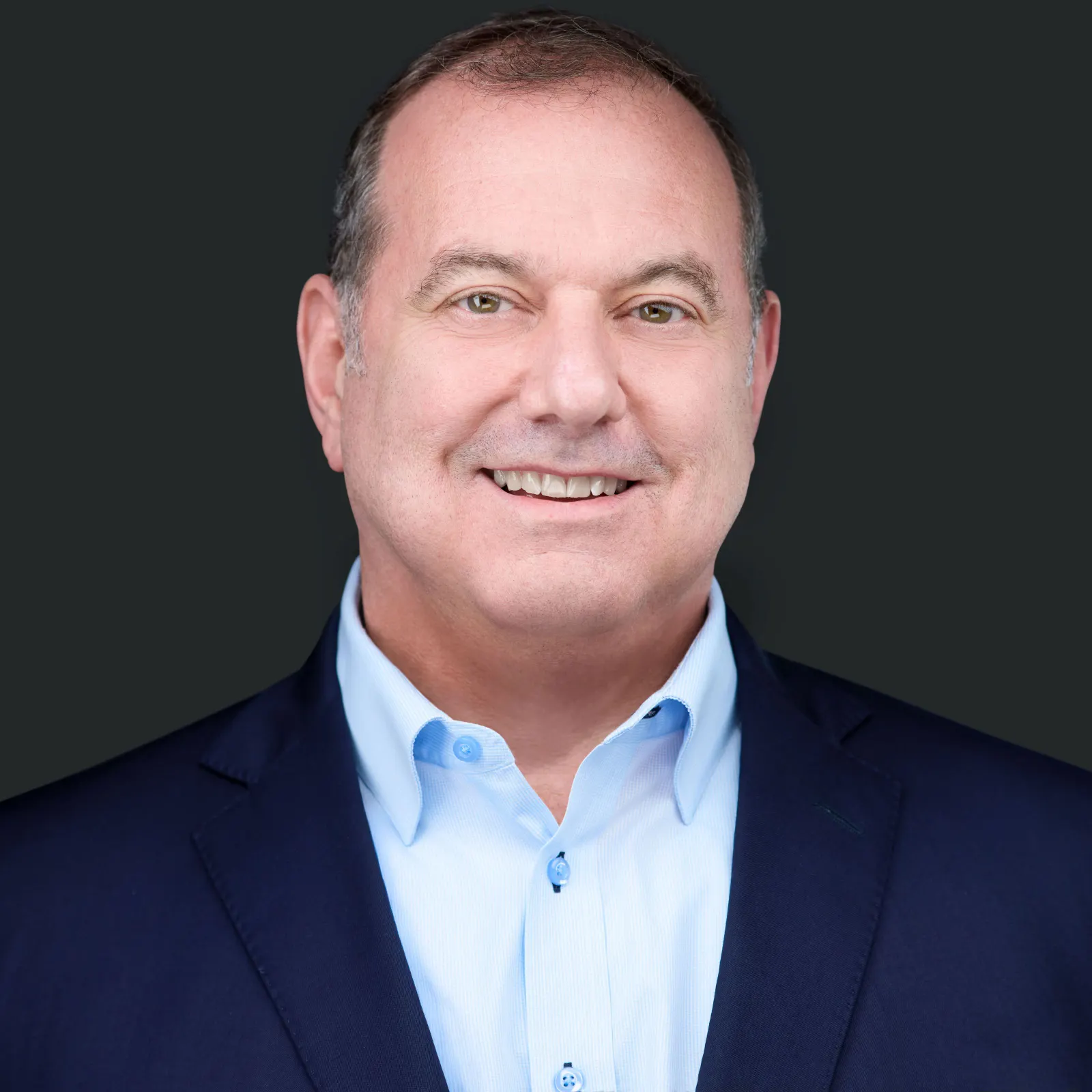
CFO, Protos Security
First CFO position: 1998
Notable recent employers:
- Deloitte & Touche
- The Telx Group
- Allied Fiber
- T&M Protection Resources
This interview has been edited for brevity and clarity.
DAN NIEPOW: You’ve held CFO roles for almost three decades now. How would you say the demands of the role have progressed over that time?
ANTHONY ESCAMILLA: At a high level, they’ve changed tremendously. The CFO role has expanded from keeper of budgets and reporter of numbers into a much broader business leader. You still have to get the fundamentals right — things like controls, capital discipline, financial reporting, etc. But today, as a CFO, you’re also expected to be a strategist, a data technology interpreter and a risk manager. Just to give you an example in my current role, my purview here spans FP&A, accounting and payroll, retirement benefits, data intelligence, IT, legal and regulatory, enterprise risk management, M&A and real estate facilities.
There’s a lot in there, but I think financial decisions truly only matter in the execution of all those things.
Another difference is that the pace of this job has just grown exponentially. It is a much faster-paced job. Today, stakeholders really expect decision-ready insight from CFOs. And they expect it in real time.
You’ve also served as both CFO and COO multiple times over your career. What’s drawn you to the operations side of the house?
That’s where the value is created, pure and simple. Finance is probably most effective when it’s as close as it can be to how the work is actually getting done, how services are being delivered and so on.
Looking back on my career, I’ve always enjoyed turning strategy into operating plans. I’ve enjoyed building the metrics that at least I would start using, and then others who joined the company as we grew would use aligning incentives. And one of the things I found is when you do those kinds of things, the entire company starts rowing in the same direction. That’s when growth accelerates.
Some observers say that we’re likely going to see more and more people serving in “COFO” roles. What’s your take?
It may be a distinction without a difference. When you think about PE-backed hybrid companies like ours and many others out there, the CFOs are involved in a lot of different aspects of operations, from sales to HR. The operations and finance teams, I think, are inseparable.
And when I think back on some of the other companies that I’ve worked at, I’ve seen CFO-COOs making decisions today that are not only for the next year or next budget cycle, but also for the next three, five years and sometimes even 10 years out. When I think about those types of decisions, they really need to pass two tests: One, from a finance perspective, can we execute on it? And two, are they financially sustainable?
I also know a lot of COOs who are doing lots in the finance function. A lot of COOs come from an FP&A background. So, I think you may see a convergence between these two roles, but it isn’t about power. It’s just about faster, better decisions and real-time accountability.
You got your start as a senior accountant with Deloitte & Touche. What advice would you share with newly minted accountants today?
You need to master the fundamentals. You need to pay attention to the details and the documentation, and you need to have strong ethics. But you shouldn’t stop there: You need to learn the business behind the numbers. That’s really important and where a lot of first-year accountants probably get lost.
“Do the work that’s inconvenient, ambiguous and hard, because for me, that’s where the disproportionate learning happens.”

-Anthony Escamilla
CFO, Protos Security
You need to learn how the company you’re auditing makes money. You need to figure out what drives customer retention. You need to understand the risks, not just from an audit perspective but from a wider organizational perspective.
Next, you need to build your ability communicate clearly. This is something that I developed over time. You need to get comfortable with data, but you also need to be comfortable with ambiguity. Accounting tends to be black and white, but finance and operations teams sometimes have to operate with imperfect information in the grey.
In addition, always stay curious. Great leaders know that they don’t know everything, but they know how and when to ask for help. They know who in their network to ask.
Finally, do not wait for the opportunities to be handed to you. You need to find them. Be willing to do the work that others don’t. If you propose solutions before you’re asked, that’s great. Do the work that’s inconvenient, ambiguous and hard, because for me, that’s where the disproportionate learning happens. And I actually think that that’s where careers are truly made.
You said you’ve led over a dozen acquisitions at Protos. How do you think about potential M&A targets for your business?
It’s one of my favorite parts of my job. We have a pretty solid M&A team here, and we always maintain an active pipeline of opportunities. When we’re looking at opportunities to execute, we start by considering them through a client lens. Will this help us serve our customers better? Does it give us new capabilities or better coverage? Will it give us stronger technology or help us improve our service delivery? Next, we’ll take a look at people and culture.
Over the course of my career, I’ve worked on a lot of integrations, and not all of them were successful. I’ve found that these only work when you’re working with teams that share the same values and share the same collaborative mindset.
Then, we need to get rigorous on value creation. What’s the strategy for the next five years? What’s the execution risk? Does this combined company make us stronger or more resilient over time?
I’ll note that we have walked away from a few opportunities, too. Sometimes, as you kick the tires, you find it just doesn’t check all the boxes.
In a recent article for the CFO Leadership Council, you wrote that divestitures are set to accelerate due to the “recognition that strategic focus is spread too thin across too many priorities.” Why do you think the business world lost that focus to begin with?
It’s because there’s been a mindset, among some companies, that looks only to grow faster, bigger and stronger by adding a number of companies to the portfolio. I’ve seen a lot of companies make acquisitions that I’m not sure always make sense. You end up spending a lot of management and board time trying to figure out how to make something fit. It’s a lot of wasted brain power when you could be sharpening the tools you already have.
You’ve worked under private equity in the past. In your view, what’s the key to working well with a PE sponsor?
While there might be some sponsors you just can’t work well with, the key to success with 99% of them is to approach your job with an ownership mindset. Always think in terms of enterprise value, not just your functional goals.
As a CFO, for example, I’ve got a lot of things to produce on a daily, weekly, monthly, quarterly and annual basis. But if you think like an owner, all of your decisions lead toward value creation. If you pair that kind of mentality with transparency, that’s even better. That means having clear KPIs, realistic forecasts and having the guts to communicate early when things are not necessarily going as plans, or when circumstances on the ground change.
Providing physical security services is a complex business where risks abound, including legal ones. Your own company was named among the defendants in a class action suit over alleged use of facial recognition software, for instance. As a CFO, how do you think about managing risks at a security company?
In that case that you’re talking about, the claims were specious and were voluntarily dismissed. But the point remains the same: More broadly, we’ve always taken privacy and compliance extremely seriously. From day one, we’ve built risk management into how we operate, day in, day out. We do that by having very clear policies. Whether that’s employee manuals or operations manuals, we make sure we have clear policies. We have very stringent vendor requirements.
As a managed services provider, we ensure that our employees are all properly trained, and we require that our vendors do the same. We also have very tight oversight. We’re a very high-tech but also high-touch company. In people-intensive service businesses, you have to be very disciplined in how you manage risk.