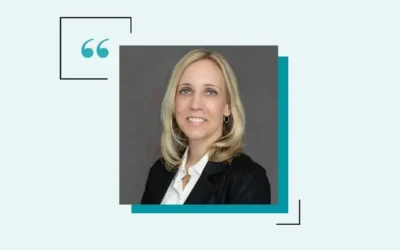
Scott Bennion got his start as an accountant for the tech industry back in the ‘90s, which means he’s seen his share of booms and busts.
Now serving as CFO of San Francisco Bay Area-based Paystand, he again has a front-row seat to a new wave of technological disruption. “I’ve always been attracted to what’s new and upcoming, whether that’s SaaS, blockchain or the dot-com boom,” he says.
In an interview with CFO.com, Bennion talks through lessons learned from his decades in tech, his advice for aspiring accountants and his take on the potential for stablecoin in corporate finance.
Scott Bennion

CFO, Paystand
First CFO position: 2006
Notable previous employers:
- Jaspersoft
- Recurly
- Versal
This interview has been edited for brevity and clarity.
DAN NIEPOW: Paystand in April launched its own stablecoin, USDb, which was billed as a stablecoin specifically for businesses. How’s the reception to that been so far?
SCOTT BENNION: We’ve definitely seen traction. I’m not going to get into numbers, but we’ve seen traction in the area.
It’s interesting because just several years ago, anything that mentioned blockchain was instantly tied to crypto, and crypto was kryptonite. Now, I find banks coming to us interested in how they can leverage stablecoin. They actually look at stablecoin as a potential threat to their business, and they want to embrace it before that happens.
Stablecoin is really the newest revolution in a payment rail since the ‘70s. I believe it’s the way that businesses are going to pay each other, and a lot of transactions are going to be done in the future. It essentially kills the three-day ACH float, because you’ve got money that settles in seconds.
You’ve been working in finance across software, SaaS and fintech firms since 1991. What would you say is the most important thing you’ve learned about these sectors since then?
There’s always a hype, and then there’s always an underestimation. Particularly for a CFO in these industries, you need to understand what’s coming and how it will impact your organization. So, for me, one of the most important things as a senior financial executive is being able to connect the dots, surface insights and tell a story.
What are some of your takeaways from advising emerging tech companies, such as Teikametrics?
I’ve seen the importance of measuring metrics early and understanding unit economics. I think a lot of companies are super focused on go-to-market, product and engineering, as they should be. But it’s good to start looking into metrics early on. The sooner you can start, the better. It ties a lot of components of the business together and gives a good foundation for the growth and expansion stage.
What’s the best piece of professional advice you’ve been given that sticks with you today?
A well-known VC who mentored me early on talked about being able to tell a narrative. It’s very important as you become a more senior executive. For a lot of us who come up through the ranks, there’s a point in your career where you’re having to go into the weeds and then be back at 30,000 feet. It’s important at that 30,000 feet to take that extra effort to say, what does this all mean? What are the insights?
What advice might you share with a young person considering a career in finance and accounting today?
This is probably what a lot of us in my cohort would say, but I’d recommend becoming AI savvy. It’s part of what we use to do our work, especially in accounting.
For young people who are graduating and going into the market, I think the “job apocalypse” is a little bit overblown. I think it’s given some cover to some companies that probably over-hired during COVID. There is something to it, but it’s not as devastating. And I think it will be important that young people coming in know how to leverage AI tools to get things done.
Anthropic dropped a number of finance plugins that everyone was super scared about. But on the flip side, if you interrogate them and you do sessions with them, you learn fast. Leverage that knowledge base.
Do you believe something has come along to usurp Excel’s place in finance?
It’s still what you call a toothpaste tool; you use it every day. Claude actually does phenomenal work on spreadsheets. You do want to understand the formulas. If you don’t understand, you can simply ask the tool “Why did you do this?” It’s a good way to get up to speed on that.