The Trial Balance is CFO.com’s weekly preview of stories, stats and events to help you prepare.
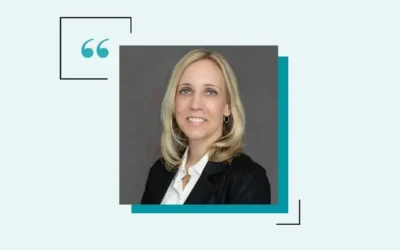
Part 1 — Microsoft CFO Amy Hood’s commencement speech
Nowadays, finance leaders across industries are expected to bring order to uncertainty, yet much of the work must take place while the foundation and goal posts are still being determined. When Amy Hood delivered her commencement address on May 10 at Brooks Field at Wallace Wade Stadium at her alma mater, Duke University, she described a career and a way of operating that reflects that reality.
“Careers… look like a straight line up and to the right,” she said. “But up close, there was… a lot more roller coaster, and certainly no well-orchestrated plan.”
Her path unfolded through decisions made with partial information. “I came to be a doctor and started as a biology major,” she said, before shifting because “economics was the major that required the fewest additional credits.” Banking followed, along with repeated attempts to leave it. At 30, she was “stamping souvenir booklets at a former federal penitentiary.” The role at Microsoft came together just as quickly. “I accepted it in the parking lot… without knowing a single detail about my compensation.”
Across each step, the orientation stayed the same. “Your next step doesn’t have to be a perfect one,” she said. “It just has to be an opportunity.”
She continued to frame the underlying skill as learned behavior. “It taught me how to learn… how to ask questions… how to sit with a problem I didn’t understand,” she said of her time at Duke, describing a capability that “never depreciated.” Inside Microsoft, the same principle carries into operations. “Being intellectually curious and learning it all beats a know-it-all every time.”
“I treated every fork in the road like it was permanent, when almost none of them are.”

-Amy Hood
CFO, Microsoft
Those ideas map closely to the pressure points shaping finance today. Capital allocation decisions are being made with shorter visibility into returns. Technology investments, particularly in areas like AI and stablecoins, are advancing faster than measurement frameworks can keep up. And with all of that, talent models are shifting toward adaptability over specialization.
In each case, the work of a finance leader today requires movement and decision-making prowess without complete certainty, a willingness to question assumptions in real time and an acceptance that not every step will be resolved cleanly.
“You’re going to have plenty of moments where you have no idea what you’re doing,” she said. “And the path ahead looks like a sheer mountain. So here’s the one thing I wish someone had told me a lot sooner: There aren’t many one-way doors. Places like Duke can wire you to believe every decision is make or break. I see now that most of the choices I agonized over, shed tears over, lost sleep over, had a perfectly accessible undo button. I treated every fork in the road like it was permanent, when almost none of them are.”
Part 2 — This week
Here’s a list of important market events slated for the week ahead.
Monday, May 11
- Existing home sales, April
Tuesday, May 12
- NFIB optimism index, April
- Consumer price index, April
- Core CPI, April
- Monthly U.S. federal budget, April
Wednesday, May 13
- Producer price index, April
- Core PPI, April
Thursday, May 14
- Initial jobless claims, week ending May 9
- U.S. retail sales, April
- Import price index, April
- Business inventories, March
Friday, May 15
- Empire State manufacturing survey, March
- Industrial production and capacity utilization, April
- Home builder confidence index, May
Part 3 — Quote of the week
“What I think finance leaders have learned the last couple of years is that you can’t be paralyzed by the macro uncertainty and geopolitical headlines. The economy keeps moving.”
Stephen Philipson
Vice chair and head of wealth, corporate, commercial and institutional banking at U.S. Bank
U.S. Bank’s Stephen Philipson discussed the results of its recent survey of senior finance leaders with CFO.com last week. The report highlights CFO optimism levels, M&A activity expectations and measuring ROI on AI investments.