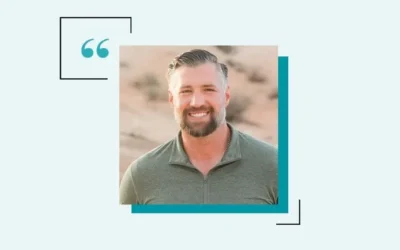
Macrina Kgil has been through the IPO grind before, but the one she led at blockchain lender Figure in September 2025 unfolded in a very different market, with far higher expectations around disclosure, investor access and post-listing execution.
More data, more touchpoints and more scrutiny now define what it means to go public. Since its IPO, led by Kgil and her CEO — former Brex CFO Michael Tannenbaum — Figure has drawn positive investor attention, supported by revenue growth, marketplace expansion and improving margins. It reflects a business model built around blockchain-based lending and marketplace infrastructure as investor focus has shifted toward AI and automation.
Kgil’s career spans public accounting at PwC, senior finance roles in financial services and years working closely with engineers and product teams. At Figure, she oversees both finance and people operations, bringing a technology-first approach to scaling a public company through automation, systems and disciplined hiring. In this conversation, she reflects on how modern IPOs differ and how she’s building a finance organization designed to scale without relying solely on headcount growth.
Macrina Kgil
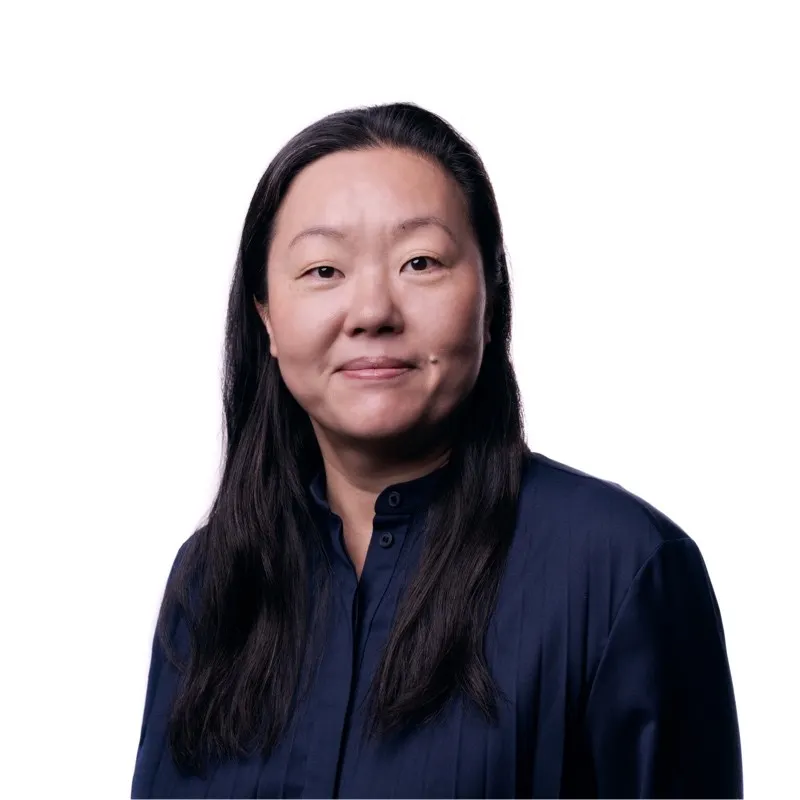
CFO, Figure
First CFO position: 2013
Notable previous employers:
- Flow
- Blockchain.com
- OneMain Financial
- PwC
This interview has been edited for brevity and clarity.
ADAM ZAKI: You led an IPO more than a decade ago and recently took Figure public. What stood out most about how the IPO process has changed?
MACRINA KGIL: I took a company public over 10 years ago called OneMain, and it was one of the successful IPOs of that class. Compared to what we did at Figure, there is just a much greater amount of information involved now.
Testing-the-waters meetings didn’t exist when I took SpringLeaf, now OneMain, public. As Covid hit and people started trying to get more information on a remote basis, there has been much more education of equity investors. Overall, equity investors have become much smarter and want to understand companies at a much deeper level.
You’re no longer meeting management for the first time during the roadshow. This time around, the roadshow felt more relaxed because we were meeting investors for the second, third or even fourth time. They already knew our story. They just wanted to make sure they really understood the details and that we hadn’t done anything different from what we said we would do in earlier meetings.
The relationship-building part was much easier, and I actually feel closer to investors post-IPO. I know that’s a strange thing to say because we’re not making friends, but the familiarity really matters. After our first earnings call, I’ve already met with many of the same investors again, and there has been a lot of inbound interest to meet, both in person and on Zoom.
I would say that’s the biggest difference I’ve noticed. It’s similar to analysts as well. There are more non-deal roadshows, more touchpoints overall and investors understand that meeting management more frequently is better for both the company and shareholders.
Your PwC background early in your career involved advising clients during the IPO process. In your view, how has technology changed the IPO process over the years, and what tools made the biggest difference for your team at Figure?
PwC was a long time ago. It shows that I’ve been around for a while, over 20 years. Everything was paper-based back then. We spent days sitting next to printers, meeting people in person, wasting a lot of paper and manually going through documents.
Now there are SEC reporting tools like Workiva. Nothing like that existed when I went public for the first time. Even comparing SpringLeaf to Figure, the process has gotten so much better because we’re using systems and tools that people tend to take for granted today.
Post-IPO, I’m also seeing tools that can read and digest your S-1 or 10-K and flag inconsistencies, where information in one section doesn’t match another section. The use of AI has made it much easier for the team to work asynchronously and not rely on one or two people’s memories to catch everything in a document.
“Creating something out of nothing and then strengthening it over time is meaningful work.”

Macrina Kgil
CFO, Figure
More broadly, I really want my team to spend time thinking strategically. That includes thinking about the storytelling in an S-1, a 10-K or a 10-Q, and not just focusing on mechanics. Most of our agentic AI efforts are around automating journal entries. We want more than 50% of our accounting work to be using AI, and we’re making a lot of progress toward that.
After an IPO, finance teams can feel like they’ve crossed a major finish line. How do you keep your team motivated once the company is public and the real work begins?
One of the first things I did was make sure we recognized the milestone. I invited many members of the team to join us at the Nasdaq celebration. It was important to say, job well done, look at what you helped us accomplish. This was a huge achievement.
At the same time, I was very clear early on that an IPO is a milestone, but it’s not a North Star. It’s not the end of the journey. I didn’t want anyone to think that once you go public, you can just sail off into the sunset, because that’s not how it works.
From day two, we focused on what comes next. That includes quarterly cadence, Sarbanes-Oxley controls, corporate governance and increased communication. These are things that investors may not think about every day, but they matter a lot to me and to the finance organization.
Finance teams actually like structure. We like things to be well defined. Building that structure, putting the right processes in place and becoming a well-run public company is something people can rally around. Creating something out of nothing and then strengthening it over time is meaningful work.
It’s not easy. There’s more scrutiny and more detailed information requests, but the team is responding well. We’re also hiring, and every time we post a role, we see a huge number of applicants. New people are joining the organization, and everyone understands that we’re learning, improving and getting better as we go.
Figure’s core platform is built on blockchain technology. With so much investor focus on AI, how do you explain the value of blockchain, and when you started working in blockchain technology, how did you get up to speed?
I’ve been in the blockchain and crypto industry since 2018. I wouldn’t say I’m an early-2010s pioneer, but I joined early enough to really understand the technology.
“I often compare blockchain today to cloud computing years ago. People questioned security early on, but now it’s embedded everywhere. Blockchain is similar. Once you use it, it becomes invisible infrastructure that improves efficiency and transparency.”
Macrina Kgil
CFO, Figure
When I first moved into the space, I learned a lot on the fly. I asked a lot of questions, did a lot of reading and had to teach myself how the technology worked. Back then, the ecosystem was much smaller, with far fewer tokens and much less understanding than there is today. I also had to learn how to talk to engineers and really understand what they were building.
At its core, we’re a blockchain technology company. The information we house is immutable. The real-world assets we tokenize live on the blockchain and can be transferred in nanoseconds, with third-party visibility almost immediately.
What’s interesting is that many of our users don’t even realize blockchain is being used. They just know the system is fast, efficient and easy to use, which is exactly the experience we want.
I often compare blockchain today to cloud computing years ago. People questioned security early on, but now it’s embedded everywhere. Blockchain is similar. Once you use it, it becomes invisible infrastructure that improves efficiency and transparency.
I also don’t see AI and blockchain as competing technologies. AI relies on clean, standardized data, and blockchain provides that foundation. In that sense, blockchain accelerates AI rather than being replaced by it.
As Figure grows post-IPO, finance work naturally expands. But, trends are saying internal promotion and technology will help remedy that demand for organizations like Figure. How are you thinking about building the finance organization and broader people operations as the company grows?
It’s really a mix, but I’m much more heavily reliant on the technology side of the house. One of the most important decisions I made early on was hiring a director of finance transformation. Her role is focused on making sure we’re using systems properly, reducing manual work and adopting AI.
If you ask your controller or FP&A leader to also manage systems, it doesn’t work. They already have a day job. Having a dedicated person focused on technology has been incredibly important.
A big focus for us in finance is using agentic AI to automate standard journal entries. Most companies have a large volume of repetitive entries. We want AI to generate those, with people reviewing them. That human-in-the-loop aspect allows the team to focus on higher-value work.
As the business expands, we are adding roles tied to new products and business lines. That’s where I want finance to be, partnering with the business while maintaining strong reporting and controls. I also strongly believe in promoting from within, because tribal knowledge matters.
People operations also sits under me, and I’m very involved in hiring our chief people officer. I’m the first screen for that role, and we’ve had an overwhelming number of applicants. One of the biggest things I’m looking for is how candidates use technology. Many of the candidates we’ve moved forward can code and have implemented technical solutions inside platforms like Workday. These are very tenured leaders.
Looking ahead, what would success look like for your finance team over the next year? Is there a specific goal or metric you’re tracking?
For my team, and for the people operations team as well, success would be reaching about 50% automation across our tasks. That includes things like journal entries, but also areas such as resume screening and other administrative work.
The goal is to make sure people are spending their time thinking, analyzing and doing work that actually requires judgment, rather than getting stuck in repetitive tasks. If we can get to that level of automation, I would consider that a big win.