While he has previously discussed the company’s spin-off from IBM and his experience with post-spin-off organizations, Kyndryl and their CFO David Wyshner have achieved significant growth over the past few months. Key milestones include securing tech partnerships with legacy brands, outlining plans to triple free cash flow by 2028 and advancing its AI offerings with a focus on efficiency.
As he nears the 20-year mark since his first CFO role, Wyshner shares his insights on why working with CEOs who have CFO experience is advantageous, how to establish controls to prevent misappropriation and theft, the role of technology in Kyndryl’s finance function and the potential of customized large language model products for the business.
David Wyshner
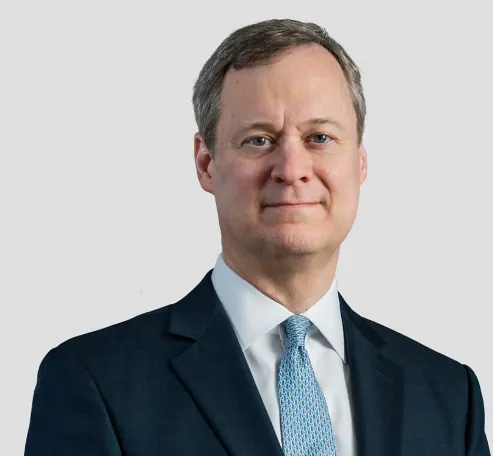
CFO, Kyndryl
- First CFO position: 2006
- Notable previous companies:
- XPO Logistics
- Wyndham Hotels & Resorts
- Avis Budget
- Cendant
This interview has been edited for brevity and clarity.
ADAM ZAKI: Your current CEO is the former CFO of IBM. How is it working with a CEO with CFO experience and how does that impact your role?
DAVID WYSHNER: I think this is a really important topic. Generally, the CFO-CEO relationship is critical for a company because everyone involved sees the dynamics of it. The board of directors sees it each quarter, investors see it in meetings and other members of management see it more frequently. A positive relationship there can be a big part of driving a company forward.
In my career, I’ve been fortunate enough to work for a number of great CEOs who, at some point in their career, were CFOs. I’ve always liked that. Although all CFOs don’t think alike, we think about things in similar ways. That approach and understanding in developing business acumen helps you get things done efficiently. When I don’t have to provide a lot of background, and I can explain metrics and financial data in ways that are quickly understood by the CEO, it’s really helpful.
Finance is a helpful background for anyone, but I think it’s particularly valuable for CEOs. Even CEOs who haven’t been CFOs tend to be very financially sophisticated, and that is always more helpful than not.
What type of new technology have you implemented where you’ve seen an immediate ROI?
WYSHNER: Our ERP systems. We’re a SAP shop now. Our legacy systems (inherited from the IBM spin-off) were a bit hodgepodge, including some off-the-shelf systems from third parties and homegrown ones we built and implemented. Moving to a world-class ERP system has been important for us.
It changes everything — how you report, collect numbers and, over time, how we forecast and analyze our data. That’s one piece of new technology that has been critical for us.
What are your thoughts on data integrity and preserving data confidentiality while also utilizing new technology within the finance function and across the organization efficiently?
WYSHNER: Creating proper guidelines around how we use these types of technologies is important to us. We have policies and practices around how our employees can use AI, but we’ve leveraged our alliance with Microsoft to use Co-pilot fairly significantly in our operations. It’s within our firewall, so the data we put into it doesn’t leave our system. We can benefit from the technology while managing the associated risks.
Our core operating platform, Kyndryl Bridge, is an AI-powered open integration platform through which we run all our delivery activities. This platform provides insights and takes action on huge data sets. We’ve invested a lot in this technology, and we’re already getting tremendous benefits from it. We’ve got more scale than anyone else, as we run more mission-critical infrastructures than anyone in the world. Investing in AI and self-learning makes a lot of sense for us.
On the finance side, though, we haven’t yet cracked the code. We haven’t found a killer application that solves our internal challenges, and we’re not necessarily expecting to. I think it’s important for businesses to invest with ROI in mind. I’d rather invest in areas where we have scale and can get significant benefits quickly. That’s why our AI investments have focused on operations and running mission-critical infrastructure rather than the internal finance function.
In the context of recent reports involving notable companies, can you provide tips or insight on setting up internal financial controls to avoid theft or misappropriation?
WYSHNER: I think it needs to be a combination of three things.
The first is culture. When we hire people, we need to make sure we talk to them about doing the right thing and make that the starting point of the conversation. In finance, things like financial and accounting integrity come to mind, but it also relates to analyzing data in a way that’s intellectually honest, interacting with customers and regulators, and doing business the right way.
The second is creating and implementing the right processes to prevent as many issues as possible, but the key is to avoid over-bureaucracy. You can’t have 10 people approve every expenditure; you just can’t run a large-scale business that way. It’s about creating a structured process that can work proactively.
The third is a quality forecasting process. It’s not a perfect method, but it’s a valuable check-and-balance tool. Strong forecasts provide an additional check to know how things will play out. Combined with cash reconciliations, this is pivotal. They say cash is king, but I like to say cash never lies either.
I’ve heard at CFO conferences that developers are working on customized large language models (LLMs) that can be sold as SaaS products. Would this type of product interest you?
WYSHNER: It’s not high on my technology radar. I don’t know why we would need a customized LLM, but having one trained on elements specific to us makes sense. It’s not clear to me why having a customized LLM would be worth it if we could train an existing one with our relevant data.
What are indicators of success you’ve seen in finance employees during your career?
WYSHNER: I think it’s a few things. There’s a drive and a desire to succeed, which usually develops into subject matter expertise. Then there’s a human element to it.
I’ve found the most successful people are fun to work with. When I’ve said, “She’s amazing or he’s amazing,” it’s usually about people who have a passion for what they’re doing, the capability to develop subject matter expertise from that passion, and the ability to put it all together into a finished product. That stands out to me.