Artificial intelligence was supposed to make work more efficient. Increasingly, some founders appear to believe it should also make employees work harder, faster and longer, too.
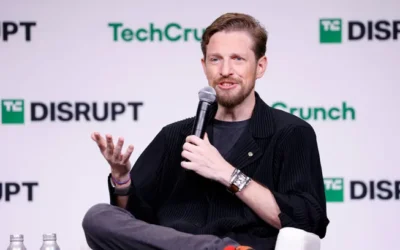
A recent LinkedIn post from Henrique Dubugras captured that philosophy directly. Dubugras, who co-founded corporate card and spend management platform Brex, said he is assembling “the most AI-native investment team on Earth” for his new startup dubbed Stealth. The post outlined hiring needs across credit, fixed income, real estate, derivatives, equities and quantitative infrastructure.
Dubugras warned prospective hires that the trending 9 a.m. to 9 p.m., six days a week format called 996 “is easy” and that employees should expect schedules stretching from “8am-10pm, 7 days a week.” He also emphasized “full-stack” execution, where employees are expected to move from vision to implementation with minimal support while rapidly mastering complex concepts across asset classes and workflows.
Dubugras did not respond to CFO.com’s request for comment on the post.
Dubugras’ expectations around AI’s impact on human capital are not unique. Microsoft, Google, Salesforce, Meta, Cisco and Block have all reduced headcount while publicly emphasizing AI investment, automation or productivity gains in various forms recently. The broader message increasingly being absorbed by younger workers is that AI may reduce the number of people companies need while increasing the intensity and output expected from the people who remain.
Part of the current AI labor philosophy also appears tied to the reality that many tech firms dramatically expanded headcount during the pandemic-era growth boom. AI is more often being positioned as a productivity breakthrough and a rationale for permanently leaner organizations after years of aggressive hiring, raising broader questions around long-term workforce sustainability, talent retention, leadership development and the ROI around new technology.
AI-native labor models may devalue expertise building
The philosophy outlined in Dubugras’ post reflects a broader shift already underway across parts of technology and finance. In finance, smaller teams are increasingly expected to operate at higher levels of intensity while AI absorbs portions of operational work. In technology and elsewhere, employees working with AI are now expected to move faster, absorb broader responsibilities and master more complex concepts in compressed timeframes.
Much of the LinkedIn post reads like a growing belief that the traditional process of developing expertise can be simply accelerated with enough pressure and AI assistance. Here, specialization is openly minimized. Employees are expected to become “full-stack” operators capable of moving across disciplines with minimal support. The process of gradually developing judgment is treated almost like inefficiency. That creates a real tension for finance organizations because, as most of Brex’s customers know, corporate finance is currently developing its talent very differently.
Leaders working in corporate finance know that controllers, treasury leaders and CFOs are not typically built through nonstop intensity alone. Much of their value comes from accumulated operational exposure, institutional pattern recognition and years spent learning how businesses actually function.
The irony is that younger workers still appear willing to invest deeply in technical development and operational work. Previous CFO.com reporting found more than half (54%) of Gen Z finance employees say they “love” Excel, while 83% of workers ages 22 to 35 spend more than five hours per day inside spreadsheets. Those findings challenged assumptions that younger workers are unwilling to grind through foundational work or won’t gain much by doing so; many already are.
The data shows many younger workers still appear highly ambitious, but increasingly want that ambition to coexist with relationships, hobbies, family life and experiences outside of work.
Dubugras’ post repeatedly frames intensity as proof of ambition while placing relatively little value on the infrastructure traditionally used to develop people over long periods of time. He writes that his employees are expected to absorb concepts in days and support themselves through AI tools. There’s no mention of any structures that help develop talent, particularly mentorship, teamwork, upskilling or long-term institutional development.
The broader labor market is also sending a conflicting message, as consumer and business-to-business companies, consulting firms and Big Four accounting firms alike are promoting AI as the future while simultaneously reducing entry-level opportunities that historically gave younger workers the chance to develop institutional knowledge in the first place.
Meta recently laid off roughly 8,000 employees, or 10% of its workforce, while simultaneously reassigning another 7,000 workers toward new AI initiatives as CEO Mark Zuckerberg pushed the company further toward becoming an “AI-first” organization, according to a recent report by The New York Times. The report also noted that Meta’s new Applied AI and Engineering group would operate with flatter organizational structures, with roughly 50 employees reporting to each manager.
Similar messaging recently emerged from Block CEO Jack Dorsey, who said the company would lay off roughly 40% of its workforce because AI tools were “enabling a new way of working which fundamentally changes what it means to build and run a company.” Dorsey emphasized that Block’s business remained strong and profitability was improving, but said he preferred to cut decisively rather than gradually as technology reshaped labor needs.
If organizations continue compressing headcount while expecting workers to somehow emerge fully formed and immediately productive, finance leaders may eventually face an even smaller pipeline of experienced future managers and executives. That matters because finance organizations are already struggling with leadership pipeline concerns.
CFO.com previously reported on the rise of trends like quiet quitting, quiet cracking and conscious unbossing, where younger employees intentionally avoid management tracks because leadership more often appears associated with burnout and unsustainable lifestyles. Labor philosophies that openly glorify constant work may deepen those concerns around accounting and finance functions already facing talent shortages.
Rejection of the always-on work culture
The broader contradiction becomes sharper when viewed through the economic realities many younger workers already face.
As outside data has suggested, more than half (52%) of millennials now maintain side hustles or multiple income streams to support rising living costs during what should traditionally represent their peak earning years. Many workers reported holding three or four separate income-generating activities outside their primary jobs.
At the same time, 58% Gen Z workers have described their jobs as a situationship, reflecting growing skepticism around long-term institutional loyalty and corporate promises. Average tenure among Gen Z workers in that survey was just 1.8 years.
The labor expectations outlined in Dubugras’ post arrive during a period where many younger professionals are already financially stretched despite working at high intensity levels and missing major personal milestones. Some are balancing side hustles after hours. Others are delaying home ownership, marriage, children or other life plans because of rising costs and unstable economic conditions.
Many still want ambitious careers and meaningful work, but they also want room for hobbies, relationships, travel and experiences outside the office. The idea of organizing life entirely around schedules stretching from early morning until late at night, seven days a week, increasingly conflicts with how many younger workers envision adulthood.
In recent years, younger workers have rejected performative hustle culture and place higher value on authenticity, flexibility and psychological safety. Andrew Roth, founder of dcdx, a Gen Z market research firm, previously told CFO.com that younger workers reject environments where workplace perks are paired with “70-hour workweeks or toxic bosses that fail to acknowledge and respect the boundaries of work and life.”
Finance leaders may eventually face the downstream effects
Even inside Brex’s own leadership conversations, there have been signs of a more institutional long-term perspective around scale and organizational development. In a January interview with CFO.com, Brex CFO Erica Dorfman described the company’s growth ambitions in terms of infrastructure and long-term resource allocation.
Dorfman also emphasized that “the role of a finance organization is mostly about resource allocation and understanding the impact of that allocation.” That framing feels notably different from a labor philosophy centered almost entirely around intensity and output density.
Finance organizations have historically understood that institutional continuity matters because businesses are not built solely through bursts of output. Sustainable organizations require leadership development, knowledge transfer and people capable of operating effectively over long periods of time. As the modern CFO likely understands, human capital cannot simply be compressed indefinitely without consequences.
With this context, the modern workforce still appears motivated. Younger employees continue investing heavily in technical skills, additional income streams, career development and entrepreneurship. Many are still willing to work intensely and in person. What appears to be changing now is the demands of technology founders and the willingness to sacrifice every other dimension of life in exchange for professional advancement alone.
As AI adoption accelerates across finance and technology, the broader workforce debate appears to be shifting away from automation itself and toward a more fundamental question: What exactly do organizations expect people to give up in exchange for opportunity, and how much high-level talent is willing to make such a trade?