Ottimate was still operating under the PlateIQ banner when Dan Kim signed on as CFO in June 2023. The old name was a nod to the company’s original focus providing automated accounts payable software for the hospitality industry.
By the end of that year, the company rebranded to reflect its ventures into other industries. “Some of our core verticals are restaurants and hospitality still, but retail and healthcare are other focus areas for us,” says Kim. The company’s customer base now includes senior living businesses, dentists’ offices and physical therapy providers, among others. They’re organizations that “look a lot like restaurants at the end of the day: lots of locations, complicated workflows, things of that nature,” says Kim.
Kim is used to learning the ins and outs of new industries, having held the top finance job for several portfolio companies owned by private equity giant H.I.G. Capital. He’s also a former entrepreneur himself, a relatively rare distinction among CFOs.
In an interview with CFO.com, Kim talks about lessons learned from co-founding a business, how a philosophy degree informs his thinking today, his response to AI doomsaying and the voices in finance he listens to.
Editor’s note: This interview has been edited for brevity and clarity.
Dan Kim
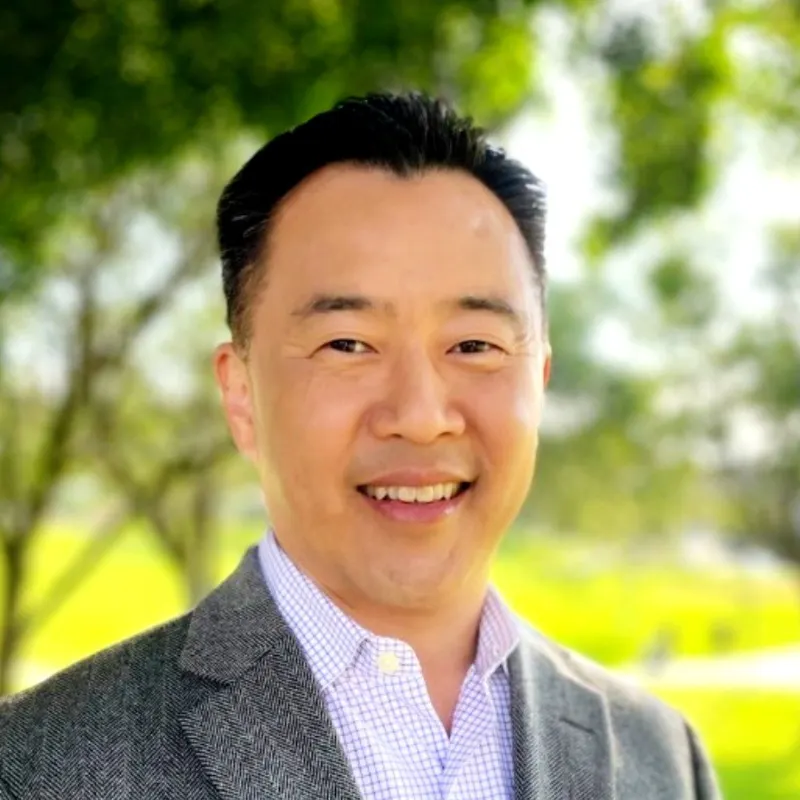
CFO, Ottimate
Notable previous employers:
- CORE Linen Services
- I.G Capital
- Jeffries and Co.
DAN NIEPOW: You earned your bachelor of arts degree in philosophy before earning an MBA. What led you to finance?
DAN KIM: Philosophy was all about learning how to test arguments: What are the premises, what’s the logic, what’s the conclusion and so on. I think there’s a lot of similarities between philosophy and finance, and so that degree was actually very good preparation for the CFO role. It’s a similar type of thinking, except instead of arguments, it’s numbers. I’ve also been drawn to growth. I wanted to work for a growing company, so finance felt like a natural fit in the business world.
You previously co-founded a company, Caregiverchecks.com, which went on to be acquired by Veritable Screening. What led you down the entrepreneurial path, and what did you take from the experience that sticks with you today?
My first foray into business was starting my own from scratch, which is probably the hardest thing that I’ve ever done. I don’t think a lot of CFOs have gone down that path. It’s made me a better CFO in that I had to learn about operations, customer success, selling and so on. When I talk to people in the organization about any of these things, I know what they’re talking about and can relate. I know what they’re going through and can help them achieve what’s best for them and the entire organization.
Would you ever found a company again someday?
Never say never. It’s always a possibility in the future. But I do like being in a growth stage of a private-equity backed software company now. In some ways, I’m facing similar challenges to an entrepreneur: Building systems, hiring, capital allocation, etc. One thing that’s great about working at an existing business is we have cash, an organization and a raison d’etre. That means we can scale faster than starting from scratch. I like having the resources.
You went from a private equity firm to a laundry services firm to an accounts payable tech firm. What would you say is the through line in your career?
I’d say it’s learning and problem-solving. One of the things I enjoyed about working in private equity was working with all different types of businesses. Whether it’s a healthcare laundry company, a paper mill north of Montreal or a chemical business, I really like learning about different businesses and different business models.
Going into a new business forces you to really listen and not take anything for granted. You start from ground zero every time, and I think it’s been good training for me throughout my career.
We covered a survey Ottimate put out earlier this year about automation in AP, which stated that just 4% of firms have fully automated AP functions. Do you see that number ticking up in the years ahead? Why or why not?
Yes, for sure, that number will tick up, but it’ll be steadily rather than overnight. The reading of invoices is largely solved, and OCR has been around for a while. It’s the things that happen after that are still a challenge. Things like validating against ERP purchase orders or contracted prices, or giving finance the confidence that the controls are still holding.
I think what our survey was showing is that it’s the partial automation that is the real risk, where you’re only doing little bits and pieces of it. It looks like handoffs between different tools. That’s where the cost lies and the potential for fraud. What’s exciting to me is that with AI, we can find those larger dollar discrepancies and errors against contracts. For example, I’ve had situations where my auditors have misbilled me. It’s hard to check every single contract against every single invoice. You have POs that help do matching, but for indirect spend, it’s not always deterministic. AI can allow us to do a lot more comparisons to look into things like this.
With all the doomsday prophecies coming out of leaders at top AI labs, has your stance on artificial intelligence changed at all?
I remain enthusiastic about it. There are benefits from AI and there are obvious risks. We need to be careful as a society, but I do think there are definitely a lot of benefits. At the same time, especially in the corporate environment, it’s not a magic bullet. You need to have a lot of very good data if you want to have effective AI. There have been some realizations about the limitations of AI, but overall, I’m optimistic.
Who (or what) is an influential voice in finance that you regularly listen to?
I’ve been following some of the stuff that comes out of Andreesen Horowitz. They recently had an article titled ‘You Need a New CFO.’ There’s also the AI CFO Office on Substack, which had a response to that article. Otherwise, I follow Ben Murray’s The SaaS CFO, and I’m a fan of Jason Lemkin with SaaStr.