Early discussions around artificial intelligence focused on chatbots, productivity gains and whether large language models could assist with tasks such as drafting reports or summarizing data. More recently, attention has shifted toward agentic AI and the possibility that software could independently complete work on behalf of employees.
That shift raises a more practical question for finance leaders: If technology could create a digital clone of you, what work would you actually trust it to perform?
CFO.com posed that question during interviews with finance executives and leadership experts at the CFO Leadership Council’s annual conference in Boston earlier this month. Their answers offered insight into how experienced finance leaders are thinking about the next stage of AI adoption.
Taking approvals off the desk
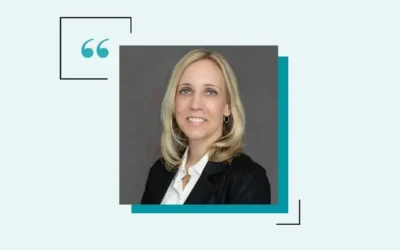
For Gina Goetter, CFO and COO of Hasbro, the answer arrived immediately. “Approvals,” she said.
The response reflected one of the less glamorous realities of executive leadership, especially at large, publicly traded companies like Hasbro. These organizations often create a constant stream of decisions requiring signoff, creating a sometimes tedious amount of administrative demands that accumulate throughout the day.

“I’m a massive bottleneck on approvals for our company, just because of the number of things that come across my plate that are requiring me to sign off,” Goetter said. “If you ask my admin where she gets the most kind of pings, it’s ‘can Gina please go approve something.’”
Goetter’s answer also reflected the realities of her dual role leading both finance and operations. Time spent reviewing approvals is time unavailable for working with business leaders, evaluating opportunities, helping teams execute and other forward-looking tasks.
The question also prompted a broader discussion about where finance leaders create value. Goetter said many responsibilities that occupy finance teams today exist because somebody has to perform them, not because they represent the highest and best use of talent.
“People don’t go to school to learn how to pay an invoice or approve an invoice,” Goetter said.
She said advances in AI have the potential to shift finance professionals toward work that has a more direct impact on business performance. “AI can free us to really take what we were trained for, what we went to school for, and use it to impact the business,” Goetter said.
More time for mentorship
Jack McCullough, founder and president of the CFO Leadership Council, viewed the question through a different lens. “My frustration is time,” McCullough said.
Before arriving at his own answer, McCullough pointed to examples that suggest digital clones may be closer than many people realize. He referenced tools that attempt to analyze financial statements using the investing philosophy of Warren Buffett and described another platform that allows users to have conversations with historical religious figures.

“You can get business advice from John the Baptist,” McCullough said. “You can reach out to St. Paul or St. Thomas Aquinas.”
Those examples led him back to the challenge he encounters most often. Over the past two decades, McCullough has advised thousands of finance leaders through networking events and one-on-one conversations. He said there are often more requests for guidance than he can realistically accommodate.
“There’s just so many people I would like to give career advice to,” he said.
McCullough described much of his work as helping future finance leaders navigate unfamiliar situations and develop confidence as they advance into more senior roles. “My job is to flip down the visor and give them the keys,” he said.
A digital clone capable of sharing that knowledge could dramatically expand his reach, which would be of interest to him, he explained. He mentioned how young finance professionals could access guidance from business leaders more easily, and experienced executives could potentially share lessons learned across decades of leadership with a much broader audience.
The idea highlights a use case for AI that extends beyond automation, a unique phenomenon in today’s conversations around technology’s role in the finance function. Knowledge transfer remains a challenge for many organizations, particularly as experienced leaders retire or move into new roles. Digital assistants trained on a leader’s experiences, philosophy and expertise could become one way to preserve institutional knowledge.
McCullough said the human element would still matter. “I’d miss it too,” he said. “I do really like the personal connection.”
Governance remains front of mind
Other finance leaders focused on a different aspect of the discussion. Karen Walker, CFO of Sysdig, said AI is creating new opportunities throughout finance organizations, though she expects review and validation to remain important parts of the process.
“I don’t think that there’d be anything that I would full stop delegate without oversight,” Walker said. “I personally think that you’re never gonna take the human out of the loop,” she said.

Her comments touched on a topic that continues to surface in conversations about enterprise AI adoption: governance.
“I think companies generally are likely behind on governance,” Walker said.
Finance teams are finding new uses for AI throughout the organization while simultaneously building the governance frameworks needed to support those deployments. However, Walker said she has seen instances where professionals place too much confidence in AI-generated outputs without fully understanding how those conclusions were reached.
“What I’ve actually seen that I think is a little bit troubling sometimes is that now people are relying almost too heavily sometimes on AI and not inspecting and really understanding,” she said.
Walker’s comments reflect questions many finance leaders are still working through as AI becomes more common in the workplace. New tools can produce answers quickly, but finance teams remain responsible for understanding how those answers were generated and whether they can be trusted.