The Trial Balance is CFO.com’s weekly preview of stories, stats and events to help you prepare.
Part 1 — SEC, CFTC seek comment on Title VII of the Dodd-Frank Act
A joint request for comment from two top U.S. financial regulators aims to address “longstanding ambiguities” of the Dodd-Frank Act.
On Thursday, the Securities and Exchange Commission and the Commodity Futures Trading Commission announced that they’re seeking public comment on “potential opportunities to further update, clarify, and harmonize certain derivatives product definitions and interpretive issues,” including the use of perpetual futures contracts and the definition of security-based swaps.
In a news release, SEC Chairman Paul Atkins said that “clarification is long overdue” on the Dodd-Frank Act’s Title VII, a component of the 2010 law aimed at providing a regulatory framework for swap markets.
“Through good-faith cooperation efforts, we can create a level playing field where established firms and new entrants alike can compete and innovate on equal footing regardless of whether they’re registered with the SEC or CFTC,” Atkins said in the release.
The agencies are seeking comment on “public comment on potential ways to draw clearer regulatory lines for agency oversight of innovative products that may implicate the regulatory interests of both Commissions,” they wrote in the joint request for comment document.
The public comment period will stay open for 60 days after the request for comment is published in the Federal Register.
The request for comment came on the same day that exchange operator CME Group filed a federal lawsuit against the CFTC, arguing that the commission broke the law by allowing prediction markets company Kalshi to list perpetual contracts as futures and not swaps, according to Wall Street Journal reporting.
Lawyers for CME Group said that CFTC circumvented rules aimed at protecting the economy from the “special dangers that unregulated swaps posed,” the Journal reported.
A Kalshi spokeswoman told the newspaper that CME’s suit is “about the fear of competition” and not the law. For finance teams, the suit and the agencies’ public comment request are a reminder of the many gray areas posed by new and emerging types of fintech products, and the still-undetermined regulatory landscape surrounding them.
Part 2 — This week
Here’s a list of important market events slated for the week ahead.
Monday, June 22 — None scheduled.
Tuesday, June 23
Wednesday, June 24
- New home sales, May
Thursday, June 25
- Initial jobless claims, week ending June 20
- Personal income, May
- Personal spending, May
- PCE index, May
- Core PCE index, May
- Durable-goods orders, May
- GDP, Q1 revision
Friday, June 26
- Advanced U.S. trade balance in goods, May
- Advanced retail inventories, May
- Advanced wholesale inventories, May
- University of Michigan Consumer Sentiment, June final
Part 3 — Quote of the week
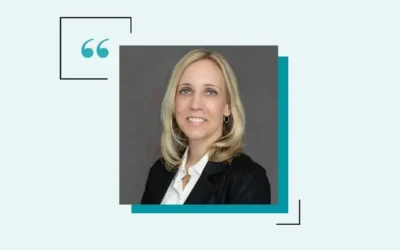
“When you’re in a high-growth environment, the business needs you to stay in step with it, maybe even a little ahead of it. You can’t wait until everything is perfect before you put something out. You have to be willing to move fast and fail fast. Don’t be afraid to be courageous.”

Karen Walker
CFO, Sysdig
Sysdig CFO Karen Walker sat down with CFO.com at the recent CFO Leadership Conference to discuss the lessons she learned from working at high-growth companies, the rise of the COFO role and her thoughts on artificial intelligence governance.