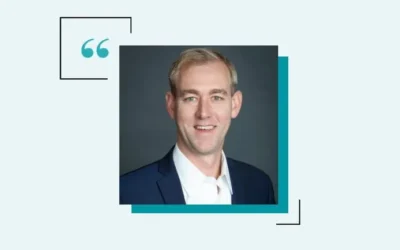
When Charles Wagner joined Vertex Pharmaceuticals in 2019, the company was preparing for its biggest moment yet.
Trikafta, the cystic fibrosis treatment that would later become Vertex’s biggest product, was nearing approval. The company also had a pipeline of programs targeting new disease areas, giving leadership confidence that additional growth opportunities could emerge in the years ahead.
For Wagner, who now serves as both CFO and COO, one of the immediate priorities as CFO involved resource allocation. “I never doubted that I actually had work to do right away,” he said. “Primarily around resource allocation.”
Speaking at the CFO Leadership Council’s annual conference earlier this month, Wagner reflected on the decisions Vertex faced when he came on board. The company needed systems that could support the growth that would come with Trikafta’s approval.
“We were building the infrastructure for the company to scale, but in a way that was adaptable,” Wagner said.
That experience shaped Wagner’s view of the CFO role and continues to influence it today. As Vertex invested across a pipeline of programs and prepared for future growth, finance determined where resources should go. Wagner described that responsibility as portfolio management, a concept he believes sits at the center of the modern CFO role.
Now that Vertex has grown from roughly $3 billion in annual revenue to $13 billion and headcount has increased from about 2,500 employees to 7,000, Wagner said the experience reinforced a lesson that continues to influence his leadership approach: Many of the decisions that matter most involve opportunities that are still taking shape.
The case for adaptability
Wagner said those early years at Vertex reinforced an idea that still shapes how he thinks about finance leadership.
“My colleagues in finance, IT and HR were all wrestling with the same problems. Everybody’s fighting their fight and doing their best.”

-Charles Wagner
CFO and COO, Vertex
The company was investing across a portfolio of programs at different stages of development, each carrying its own timeline, risk profile and resource needs. Finance leaders were tasked with deciding where to place capital while ensuring the organization could support future opportunities as they emerged.
“You don’t really know what’s going to come out of the portfolio,” Wagner said. “It’s scalability with a degree of adaptability.”
The comment reflects the realities of drug development. In a recent interview, Vertex CEO Reshma Kewalramani noted that only one out of every 10 projects that begin in the lab ultimately becomes a medicine. Wagner said that dynamic was one reason he felt comfortable joining the company.
“Not everything had to go right,” he said. “I needed to be able to feel confident that a few things out of 10 were going to go right.”
Wagner said the same thinking influences how he approaches decision-making. When members of his team are evaluating a difficult choice, he often asks two questions: “How wrong could you be?” and “What would it cost if you were?”
“If you understand the margin of error on a decision, and you understand the cost of being wrong, it actually frees you up to make decisions faster and move faster,” Wagner said.
The exercise helps teams distinguish between decisions that require extensive analysis and those that can be revisited later. Understanding that difference, Wagner said, allows organizations to maintain momentum while remaining thoughtful about risk.
Why the COO role made sense
Wagner was one of several speakers at the conference carrying responsibilities beyond finance, as his own role expanded earlier this year.
In February, Vertex announced that longtime Chief Operating Officer Stuart Arbuckle would retire after helping guide the company through a period of significant growth and commercial expansion. Wagner was selected to succeed him while retaining his CFO responsibilities. The move placed additional functions under his oversight, including HR, IT, communications and facilities.
What stood out during the discussion was how little emphasis Wagner placed on the title itself.
“The most precious resources we have are dollars, people and technology,” Wagner said. “If you think about finance, HR and IT as functions that are primarily responsible for allocating and delivering those resources, there’s a lot of synergy in having that under one person who is an enterprise-level portfolio manager and resource allocator.”
The explanation offered a different perspective on the expanding CFO role. Wagner argued that many support functions spend their time addressing similar organizational challenges, making the transition from finance to broader operational oversight less dramatic than it may appear from the outside.
“My colleagues in finance, IT and HR were all wrestling with the same problems,” Wagner said. “Everybody’s fighting their fight and doing their best.”
He said bringing those groups under a single leader created benefits that extended beyond reporting lines. “Having one leader proved to be very synergistic,” Wagner said.
“If you think of the role as chief portfolio manager, chief resource allocator, chief performance manager, it’s a lot easier to switch tasks between functions,” he added.
Scaling people and systems
The portfolio manager mindset surfaced again when Wagner discussed hiring and technology.
At certain points during Vertex’s expansion, he noted that the company was hiring roughly 1,000 employees annually. Wagner said the most difficult task during that time involved identifying people capable of succeeding inside an organization growing at an unusual pace. He said Vertex’s culture became an important screening tool.
“We move with a sense of urgency. We move really fast,” Wagner said. “It’s very demanding. We expect a lot from people.”
By the time candidates reached senior interviews, most already possessed the necessary experience. “Functional expertise and credentials are sort of the price of entry,” Wagner said. “All of my interviewing is about personality and fit.”
The same thinking influenced how Vertex approached systems and technology. As the company expanded, leaders had to build infrastructure that could support a much larger organization without slowing it down. Leadership and their teams played a role in helping those changes gain traction across the business, particularly when new systems required employees to change established ways of working.
More recently, Wagner has applied a similar framework to artificial intelligence. “Think about AI as a unit of labor,” he said.
Vertex spent time preparing its data and identifying use cases before deploying AI more broadly. The company now uses AI in areas such as expense auditing and procurement. Wagner said many organizations approach technology differently than they approach people. Employees receive training, coaching and time to develop. New technology is often expected to produce results immediately.
Wagner encouraged finance leaders to think about AI agents much the same way they think about new hires. “If you think about an agent the same way, you’ve got to onboard it, you’ve got to train it, you’ve got to develop it and you’ve got to evolve it over time,” Wagner said.
Wagner described himself as a builder throughout the discussion. He compared the process to constructing a house, where progress begins long before the finished product comes into view.
“At the beginning of that project, there’s always a hole in the ground and a pile of lumber,” Wagner said. “The builder is not intimidated by the messiness of that.”