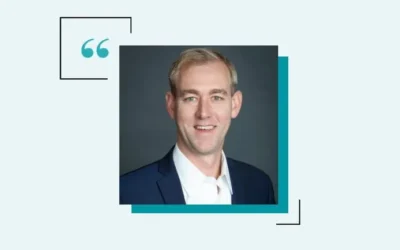
Christy Totin has built a 20-plus-year finance career on lessons and experiences from GE’s two-year financial management program. Through six-month rotations, the then-recent college graduate was exposed to four different businesses, commercial operations, leadership styles and business cultures.
Totin applied that finance and accounting foundation during the first half of her career to a range of roles at FedEx, plus apparel retailers L Brands, Express and American Eagle. At the latter, she was senior director of financial operations for workforce and project management before leaving fashion retail in the fitting room to join Net Health, a specialty healthcare software provider, as FP&A director.
Totin’s seven-year tenure at Net Health includes serving as vice president of corporate analytics and insights and senior vice president of finance and accounting before being named a first-time CFO in early 2025. She directs a 22-person finance and accounting team at the private equity-backed organization.
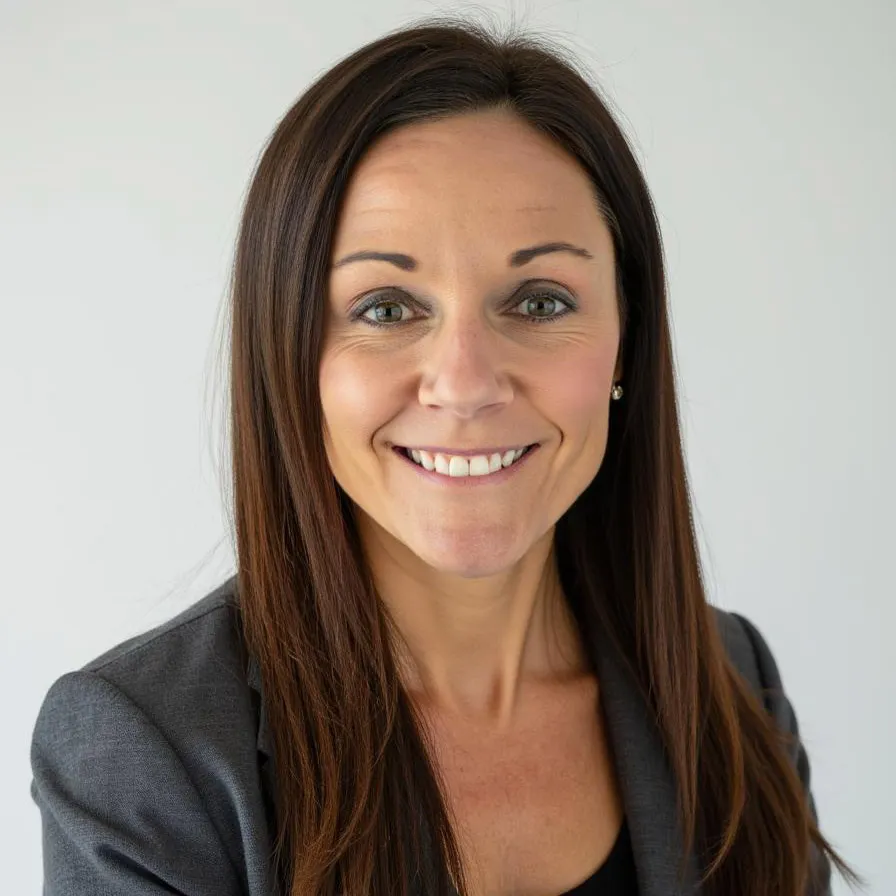
Christy Totin
CFO, Net Health
First CFO position: 2025
Notable previous employers:
- American Eagle Outfitters
- FedEx
- Express
- L Brands
- GE
This interview has been edited for brevity and clarity.
SANDRA BECKWITH: Net Health is a big change from the first half of your career, much of which was in retail fashion. What appealed to you about the company when you joined in 2019?
CHRISTY TOTIN: I wanted to make sure my next step was at an organization where finance had a seat at the table, and Net Health offered that. I was also attracted to its SaaS recurring revenue business, which is less complex than I had experienced before. There’s no inventory, hourly labor, in-store and online discounting, weekly promotional product pricing, real estate design or construction involved.
Then there’s the mission. Net Health is helping clinicians document and manage outcomes and get paid accurately. It has real stakes, with work that helps others.
Net Health’s March 2025 announcement that you were promoted to CFO mentioned “an exciting period of momentum for the company.” Tell me about that, and your charter in your new role.
After a transformative new CEO joined Net Health just 18 months before my promotion, the company was focusing on stabilizing operationally as we accelerated growth through an M&A strategy.
That meant reorganizing into business units around rehab therapy, wound care, occupational health and value-based care. My charter was to introduce greater financial rigor and transparency to the units as they became more complex. This included bringing visibility to our product P&Ls, something we never had before.
As part of this, I had to rebuild the finance function — how we capture data, flow it through the system, and report it with the right level of detail — so it best serves our new structure.
I noticed you are Six Sigma Green Belt-certified. How do you use this training and mindset in your CFO role now?
Six Sigma is about defining what “good” looks like, measuring against it and systematically eliminating the noise and waste between where you are and where you want to be. That maps perfectly with how I think about finance.
For example, we are constantly working on client retention and annual recurring revenue analysis. When I’m looking at the trends, I’m asking where the variance is coming from. Which products, which customer segments, which markets and why? Is it product? Is it price? Is it cost?
This helps me provide leaders with data and context around the different pieces of the process, including where we might have a breakdown.
Looking back on your entire career, what do you think was the most pivotal moment… or what “aha” has had a significant impact?
Just before I became CFO, our controller left. We had run FP&A and controllership as separate functions; leadership thought we should keep that approach and replace the controller.
But I proposed consolidating the accounting and FP&A teams under my leadership. That would allow me to reorganize the team around their strengths while eliminating the accounting and FP&A silos that hindered communication and progress.
It was a bold approach and not the most obvious option, but we accomplished more with the same number of people and one less controller than we had before. My “aha” was that the most powerful move isn’t always the most obvious one.
What’s something you wish you’d known earlier in your career?
It’s that influence isn’t earned through analysis but through relationships and trust. I spend a lot of time trying to build trust with my team, business partners, peers and the board.
I also used to think that good work would speak for itself. It doesn’t always. Find the partnerships and collaborations along the way that will help you get noticed, expose your work, and make a difference outside your team or boss.
What advice would you give to others in finance hoping to become CFOs?
Learn to communicate like a leader, not an accountant.
A lot of people can talk numbers, but they can’t clearly define a complex problem for somebody who’s not an accountant. It’s important to be able to take that complex challenge and present it in an easily relatable way.