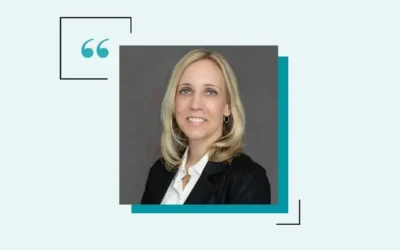
At workforce payments company Branch, CFO Matt Peterson says he’s on a mission to “build the core infrastructure for how modern workers get paid.”
He’s certainly had a hand in laying the groundwork for growth, having guided his former employer Fastly to a $180 million IPO in May 2019. Though he’s not yet ruling out an IPO for Branch, he says his main focus right now is building a durable business.
A former investment banker, Peterson officially joined Branch in November 2025. He’s betting big on the business of earned wage access and other similar services, and clearly sees potential in the company, which he says has grown “100% over the last three years.” Founded in 2015 as a scheduling tool for hourly workers, Branch has since pivoted to earned wage access and additional workforce payments services. The company, Peterson says, is no longer a “startup by any means.”
In an interview with CFO.com at his 90-day mark at the company earlier this year, Peterson shared his approach to IPOs these days, how he found his way into fintech and the automated tools his team uses.
Matt Peterson

CFO, Branch
Notable previous employers:
- Fastly
- Snappy
- Union Square Advisors
- EY
Editor’s note: This interview has been edited for brevity and clarity.
DAN NIEPOW: You guided Fastly to an initial public offering in 2019. Was that your first IPO, and what would you say are the biggest lessons learned from the experience?
MATT PETERSON: I helped on IPOs both as an investment banker and adviser, but Fastly was the first one that I did as an operator. I had two key takeaways from that: First, if you want to have a successful outcome, you have to do the basics very well, almost religiously. Anyone who’s operated in businesses of any scale understands it’s actually very hard, but once you get those down, the rest takes care of itself. The second piece is that in the end, it’s more of a discipline, not a deadline. It’s about having certain operational rigor without getting in the way of product and engineering. I often joke that after an IPO, you haven’t arrived, you’ve merely gotten a member’s jacket.
Any plans for a Branch IPO one day?
We want to build a great business that’s scalable and durable. That’s what we’re most focused on right now. If we build something great, we’ll have options. Should that opportunity come down the road, awesome. If not, there are other ways to tap capital markets.
Your role at Branch appears to be your first in fintech. What attracted you to the job?
The biggest thing for me is the impact that we make on workers and their lives. But I’d also add that almost my entire career has been focused on usage-based infrastructure and infrastructure software. If you think about Fastly, they were one of the first public usage-based companies. Then there was Snappy, which is a gifting enterprise marketplace, but at the same time, it’s usage-based software on the backend. So, there’s some pattern recognition there. When you think about fintech, it’s inherently usage based. That’s one thing that attracted me to Branch.
When I got to take a look at the unit economics at Branch, I got really excited to bring my expertise and experience here. I want to take us to the next level of growth.
The news release announcing your appointment notes that you have experience “connecting product usage data to financial decision-making.” Are we talking usage-based pricing here? Can you share a bit more about how you think about this?
When you think about usage, especially from a pricing standpoint, it’s about incentivizing behaviors and outcomes. The pricing needs to incentivize an increase in usage, and that aligns incentives between the provider and the user. When customers do well, we do well.
When they’re not doing as well, we can hold off, and we’re not holding your feet to the fire for a subscription-based type pricing piece at the same time.
When we talk about aligning the user behavior to our product marketing and financial decisions, it’s about first understanding your cohorts. When users show you who they are, you should generally believe in them, leverage that data and then find out how to further incentivize them to win in their own lives. The more you understand that customer persona, the more you understand how they use the platform and what keeps them on the platform. That then helps you build better products and engineer better features to increase lifetime value, and increase the usage and time on the platform.
A lot of times, as a CFO, we’re called on to protect cash. My view is that, outside of that, we’re also called on to align the product roadmap to a financial plan. If I can’t do that, I didn’t do my job well.
We hear lots about artificial intelligence use in the finance department these days. How are you using it personally in your own day-to-day?
I’m in the camp believing that AI is going to be a magnifier of our team’s current capabilities. For some examples of how this plays out in real time, we’ve been building AI bots to do journal entries for us so that we don’t have to do certain manual ones. We’ve also been implementing tools such as FloQast, where we’re using AI to automate our reconciliations on a day-to-day basis. From a modeling perspective, I’m a big proponent of shortcut.ai. It’s Excel native, and I can ask it to go build things for me. I’d say it gets you about intern-grade work, at about 80% of where I need it to be, but it saves time on what I’d call “ad-hoc modeling work.” It can do that while I work on something else. We’re continuously looking at other new tools.
There’s a lot of abstract AI software out there. For me, there has to be a tangible ROI, and you have to be able to tie it directly to time savings for my team right now. That’s another big piece: If AI simply frees up time but doesn’t allow your team to take on more responsibility and have more output, what was the point? It’s not a replacement standpoint; it’s about turning people into superhumans.
How do you think about managing a finance team remotely?
It is a different skill set compared to my time being in an office working on Wall Street. I’m used to being in a bullpen for many hours a day as a junior banker. But with remote, there’s certainly more flexibility. At the same time, it requires you to hire folks who can self-start. The check-ins need to be more frequent, though I’m more of a fast, quick check-in type of guy. I’d rather not have people sit in long meetings.
The other piece of managing those teams remotely is that you can sometimes overdo it in terms of getting too detailed and too granular. I mentioned going back to the basics. I’m more of a “top three” mentality. What are the top three things you’re working on this month? Did you do them? Yes or no? And then, what are the next top three that you’re working on? Then, when you get to the end of the year, you’ve got 30-plus things that you’ve accomplished as a team.
From a security standpoint, we’re in finance, so there are things that we can’t share broadly. I treat that no differently than I would in an office. We are very picky about the security of our docs that we share across the organizations. I’m agnostic as to whether you only use OneDrive or Google Drive, but I do make it mandatory that my team understands how security settings work.
What’s your philosophy on sharing financial performance with employees?
I am an advocate for showing folks at all-hands meetings how we’ve done on a monthly basis. I also have what I call “flash reports,” where there are scorecards showing our goals, how we’re performing, what we need to do better and other key metrics. We actually started presenting that at all-hands since I joined. The reason I’m such a huge proponent of it is that if folks can understand the why and the bigger picture of what we’re doing, they become much more motivated and effective. That’s especially important in a remote environment.