At Chipotle Mexican Grill, even the finance team is experimenting with new ingredients.
On top of the many moving pieces within his finance function, CFO Adam Rymer said enterprise large language model tools are helping analysts evaluate operational tests and financial scenarios faster as the fast-casual chain continues opening hundreds of restaurants each year. The company did not disclose which LLM provider it is using.
Rymer stepped into the CFO role in 2024 after spending nearly his entire career inside Chipotle’s finance organization. He joined the company in 2009 as a compensation analyst and rose through several finance roles before being promoted to chief financial officer in 2024.
Today, he oversees the financial strategy of a company operating more than 3,700 restaurants worldwide and pursuing continued domestic and international expansion.
In a recent conversation with CFO.com, Rymer reflected on lessons from predecessor Jack Hartung, shared how international expansion impacts capital allocation and growth strategies, discussed how the finance team uses technology to analyze operational tests and detailed what he looks for when evaluating industry events and peer networking opportunities.

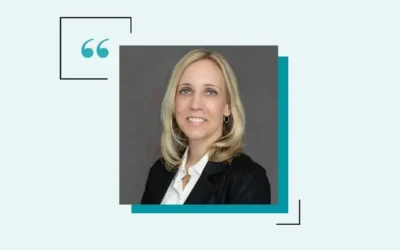
Adam Rymer
CFO, Chipotle
Notable previous employers:
- Rock Bottom Restaurants
- Travelocity
This interview has been edited for brevity and clarity.
ADAM ZAKI: In our last conversation, you emphasized Chipotle’s focus on maintaining affordability, noting that many of the company’s most popular menu items remain under $10 in most markets. More recently, leadership has said that a majority of Chipotle’s customers have household incomes above $100,000. Does that change how you think about menu pricing or the overall positioning of the brand?
ADAM RYMER: Affordability, or accessibility from a price point standpoint, has really been in Chipotle’s DNA from day one. It goes back to our founder, Steve Ells, and the early days of the brand. Something that was near and dear to his heart was changing the way people think about eating fast food. You can have high-quality ingredients, classic culinary techniques and fresh prep every morning, but if you’re charging a high price, you’re not really doing anything differently.
The combination of offering that quality while keeping prices accessible is what allowed Chipotle to change the way people think about fast food, and that mindset is still front and center for us today.
If you look at last year, we were running price increases somewhere around 1.5% to 2% for the full year, while the overall industry was closer to 4%. This year it will be even lower. The full-year impact will be somewhere in that 1% to 2% range, and in the first quarter, it’s even lower than that. On our last earnings call, we shared that it was around 0.7%, while the industry is still running at about 4%, and even grocery prices are up around 2%.
We’re going to continue leaning into that value proposition as much as we can to keep our food accessible. On average across the country, we’re still in that $9 to $10 range for a chicken entrée, whether it’s a burrito, bowl or tacos.
We’ve also found other creative ways to highlight value. Our protein menu, which we launched in January, showcases Chipotle as a place for clean protein by highlighting how much protein is in items like a chicken bowl or steak burrito. It also allows us to highlight more accessible price points, such as a single taco at about $3.50 on average across the country or a protein cup around $3.80.
Your predecessor, Jack Hartung, often emphasized that Chipotle grew without taking on debt, but the company still carries significant lease obligations tied to its restaurant footprint, with new international expansion being a considerable focus. How do you think about that balance when making capital allocation decisions?
“We have no debt on our balance sheet, and we’re able to generate enough cash to invest back into our growth, our benefits programs, our Food with Integrity initiatives and other areas of the business, while still returning cash to shareholders.”

-Adam Rymer
CFO, Chipotle
That philosophy still very much plays into how we think about the business. We’re fortunate that the foundation Jack established with our economic model allows us to continue operating that way today.
If you look at 2026, for example, we’ve said we’ll open somewhere between 350 and 370 new restaurants. Of those, about 10 to 15 will be partner-operated, but the rest will be our own restaurants. Each one typically costs between $1.2 million and $1.3 million to build.
We’re able to fund that through the cash flow generated by our existing restaurants and still have cash left over to invest back into the business in other ways or return to shareholders. Last year, for example, we repurchased somewhere around $2.5 billion of our shares, and we’ll continue leaning on that as a way to return capital to shareholders in 2026.
When you look at the overall makeup of our economic model, we’re in a very solid position. We have no debt on our balance sheet, and we’re able to generate enough cash to invest back into our growth, our benefits programs, our Food with Integrity initiatives and other areas of the business, while still returning cash to shareholders.
It’s a really powerful economic model, and something we believe allows us to continue growing the business without needing to utilize debt.
How has the push into international markets factored into the company’s long-term growth strategy?
Right now, we have about 4,100 restaurants across North America. We believe we can get to around 7,000 in that region, so we’re a little more than halfway there. That means we’re continuing to build a strong foundation of people and infrastructure that comes with opening hundreds of restaurants each year.
As you can imagine, opening somewhere in that 300 to 400 range annually means that eventually we’ll approach that peak of around 7,000 restaurants in North America. Because of that, we’re starting to plant growth seeds across the world as we think about how Chipotle can expand outside the U.S. and Canada.
We’ve been in Europe for some time with a company-owned operating model, and we’ve recently seen success in markets like central London and Frankfurt, which has helped green-light opening more locations in those areas.
Beyond Europe, we’ll continue to look first at a company-operated model because of the strength of our economic model. However, there are certain parts of the world where it makes more sense to pursue either a partnership or a licensing agreement. A partnership would be closer to a joint venture type of arrangement, while a licensing model is more similar to what we’ve done in the Middle East.
In those cases, we look for world-class operators who can grow the brand in a way that respects what we do from both a hospitality and culinary standpoint. Ultimately, the goal is to find the best way to bring Chipotle’s approach to real ingredients and real cooking to more people around the world while maintaining the accessible price point that’s central to the brand.
Digital sales represented nearly 70% of Chipotle’s business during the pandemic and now sit closer to the high-30% range. Do you see that mix stabilizing there, or do you expect digital ordering to grow further over time?
It’s an interesting question because we don’t necessarily have a specific goal for that mix. Right now we’re bouncing around in the high-30% range for digital sales, and that includes order-ahead through the app, delivery and catering or group orders.
During the pandemic, it peaked somewhere around 70%, but over the last several quarters, it has settled into that high-30% range. Our focus is really on growing the business in whichever way our guests want to access us, whether that’s in-store or digitally.
We’ve continued to lean into Chipotlanes. We now have more than 1,000 locations with a Chipotlane, and they represent around 80% of the new restaurants we’re opening. We’ve seen a lot of success there because guests value the convenience.
What’s interesting about those restaurants is that they lean less toward delivery and more toward order-ahead. Customers are clearly taking advantage of the convenience of placing an order on the app, paying in advance and then picking it up quickly through the Chipotlane. It allows them to skip the line and complete the transaction in a matter of seconds.
You and Hartung have both spoken about using technology to automate parts of the finance function over the years. Have there been any tools or systems recently that have made a noticeable difference in how your team works day to day?
One of the benefits of being a growth company and opening 300 to 400 new restaurants each year is that it forces us to find ways to scale our processes without always adding headcount. Within finance, there are several areas where we’ve been able to automate work so our teams can manage more restaurants without growing at the same pace as the business.
A good example is licensing. Each restaurant has somewhere between eight and 12 different licenses that we have to manage, whether it’s health, alcohol or the ability to operate in certain municipalities. As the number of restaurants grows, you might assume we would need to add more people to manage that work. Instead, we’ve invested in tools that help automate and track those requirements, so the team can handle more locations without adding headcount.
We’ve done similar things in areas like payroll and certain bookkeeping processes. That allows our teams to focus less on administrative work and more on higher-value analysis, while also creating opportunities for people to move into larger roles as the business grows.
More recently, we’ve also launched some enterprise LLM tools. It’s still fairly new, but we’ve already seen teams in areas like FP&A and sales analytics begin using them. For example, when we’re analyzing a test in the field, whether it’s a new menu item or an operational change, what might have taken an analyst a couple of days to fully understand can now take a matter of hours.
That allows us to test more ideas, understand results faster and get deeper insights into how different initiatives are impacting the business.
There are a lot of CFO leadership groups, conferences and networking events out there. When you’re deciding whether to attend one, what makes an event worthwhile for you?
I do get a lot of invitations. I could probably fill up my calendar or get a lot of free lunches.
The events I’ve enjoyed the most over the last year have honestly been put on by some of our banking partners, and they’re very selective about how they mix different components of the event. One example was a meeting Morgan Stanley hosted last year. Part of it was meeting with their investment banking professionals to get an update on the restaurant industry and how they might be able to help us in a strategic way.
Another part involved meeting with some of our top shareholders. [CEO Scott Boatwright] was with me, so it was both the CEO and the CFO of Chipotle, and we had the chance to interact with some of our top-tier investors.
What I really appreciated was that they also gave [Boatwright] and me a couple of hours with their economist team. It was just the two of us, without investors or anyone else involved, and we were able to get their latest perspective on what’s happening in the global economy and how they see things evolving.
Then the social portions of the event were spent with leadership teams from other businesses that were attending. That gave us the opportunity to interact with CEOs and CFOs from other consumer-facing companies.
What I really liked about that event was the mix of perspectives — the investor perspective, the economist perspective, the investment banking perspective and the peer perspective — all combined into about a 36-hour event. Scott and I both walked away feeling like it was an incredibly efficient use of time. We learned quite a bit and also made some great connections with people in similar roles at other companies.