ARLINGTON, Texas — Though the jury is still out on the long-term implications of the latest artificial intelligence tools, it’s hard not to see some parallels to the Theranos scandal.
The medical device company run by convicted fraudster Elizabeth Holmes was full of promise, claiming to have developed a finger-prick blood test that could screen for a range of diseases and disorders. Proponents of new AI tools have made similarly lofty promises, with OpenAI CEO Sam Altman claiming in a 2025 blog post that the technology could one day cure cancer.
In the case of Theranos, though, those promises quickly dissolved upon further scrutiny. Thanks to the work of Theranos whistleblower Tyler Shultz and others, it soon became clear the blood testing technology was a fraud. Holmes would go on to receive a more than 11-year prison sentence for defrauding investors.
Speaking at fintech firm HighRadius’ Radiance annual conference on Tuesday, Shultz recounted his experience unveiling the truth about the company he once worked for and issued a subtle warning to the audience of financial leaders gathered at Globe Life Field in Arlington.
“I think of Theranos as a physical black box, and AI is like this metaphorical black box,” Shultz said in a keynote address. “There are very, very few people who deeply and truly understand how that black box works, but a lot of those people are in the room right now. And so I hope we all recognize the responsibility we have as we shape the future.”
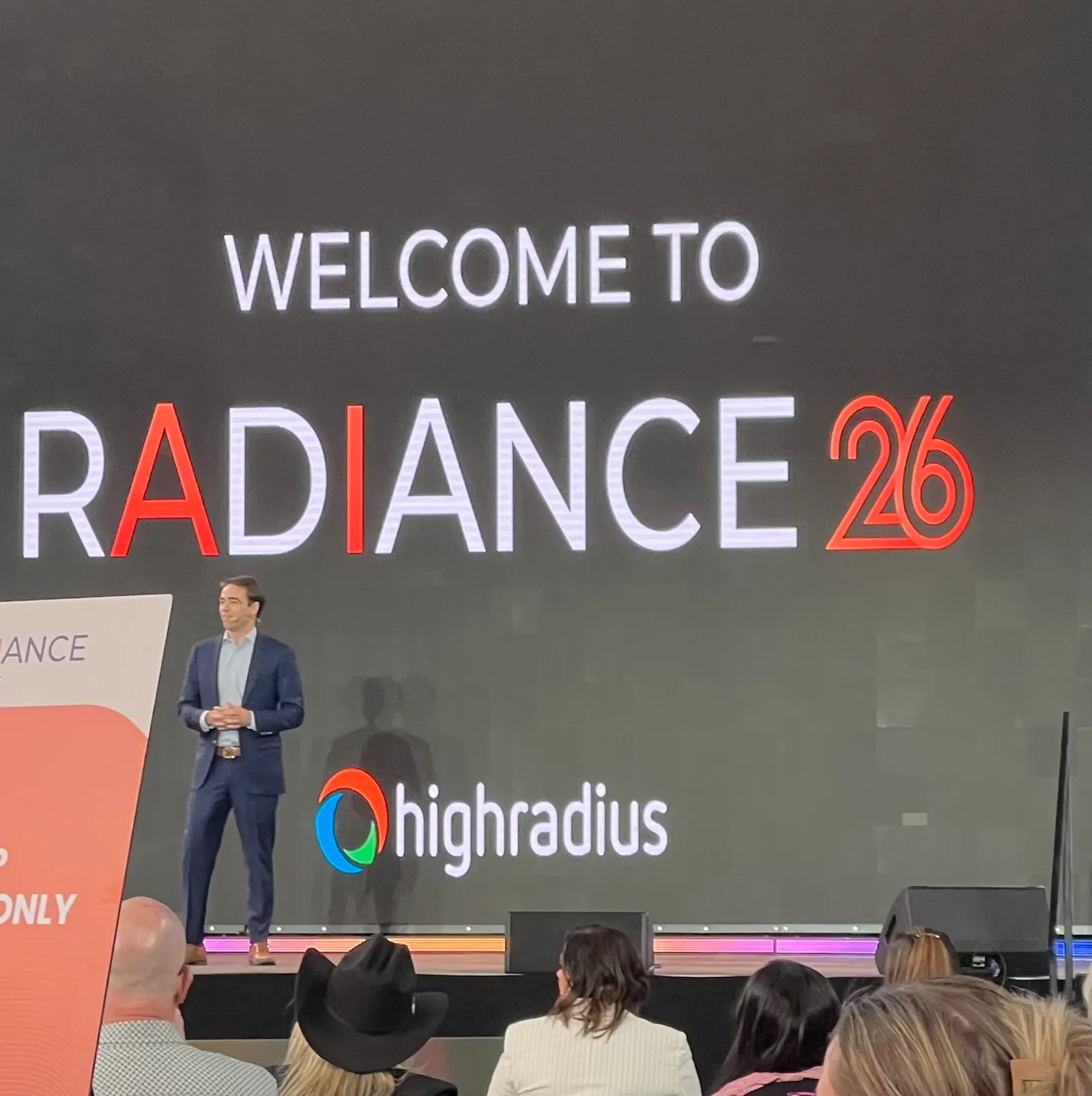
Shultz encouraged attendees to create corporate cultures “where people are willing to speak up.”
“If you’re able to do this, it really does become like a superpower,” he went on to say. “It becomes an ability to see around corners, to identify issues in their earliest stages and address them before they metastasize and turn into existential threats to your company.”
Earlier in his speech, Shultz recounted how he had to spend nearly half a million dollars hiring various lawyers to fight back against Theranos, which had asked him to retract his statements to The Wall Street Journal. At one point, Shultz said, his own parents had essentially asked him to give up the fight and “sign whatever it is Theranos wants you to sign.” Shultz, who noted he had bought a burner phone in cash to communicate with a Journal reporter, declined to do so.
Shultz’s session, delivered at the end of Radiance’s second day, marked a notable change in tenor at a conference that was otherwise sunny on the prospect of AI for corporate finance. Many other sessions that day largely focused on using automation tools to shorten close time, reduce days sales outstanding or grow business without increasing headcount. HighRadius itself bills its offerings as “AI-driven autonomous finance solutions for the office of the CFO.” Its Radiance conference is largely for current and prospective customers.
For what it’s worth, while there have been some lofty and seemingly incredulous claims about the promise of artificial intelligence in the past, speakers at Radiance seemed to take a more moderate view. Just last month, for instance, Elon Musk said that saving for retirement would soon become “irrelevant” due to a new wave of “abundance” brought on by AI and robotics.
While not directly addressing such claims, HighRadius CEO Sashi Narahari himself, earlier in the day on Tuesday, delivered a panel provocatively titled “Is GenAI the Biggest Ponzi Scheme?” In it, he framed the question as companies’ individual “bets” on the technology.
“For you as an enterprise or a company or an individual, whether it is a Ponzi scheme or not is based on the AI bet you make, and that bet is not going to be as dramatic,” he said. Narahari went on to argue that many attendees had either already become “AI managers” or were working with firms that employ them.
“You likely have a software that has an AI agent or AI colleague, and it’s already unknowingly working for you,” he said.
To get the “AI bet” right, Narahari said business leaders need to develop a new skill he termed “algorithm quotient,” or AQ. Similar to the broader notion of an intelligence quotient or emotional quotient, this skill involves “choosing the right ‘algo’ for the right problems,” he said.
“You have to build this AQ to make sure you make the right choice,” Narahari said.