As Valentine’s Day comes and goes this year, millions of former dating-app users around the world will celebrate relationships that started with a swipe, while millions of others will open those same platforms hoping to do the same next year.
Behind the scenes, the business of modern dating has become a tremendously complex financial operation. For Match Group, whose portfolio spans Tinder, Hinge, Match, OkCupid, Plenty of Fish, Pairs and several other international brands, that responsibility falls in large part to CFO Steve Bailey, who rose through the organization over more than a decade.
Bailey’s tenure stands out in a role often defined by shorter stays. After joining in 2012 as a senior manager in FP&A, he watched the company evolve from a collection of individual dating sites into a global portfolio with a unified strategy. Bailey, who will celebrate one year in his inaugural CFO seat next month, now has a direct hand in shaping how capital is allocated across the portfolio’s brands, all of whom are at different growth stages.
In a conversation with CFO.com, we discuss how Match Group balances saying no to certain investments while funding future growth, how he thinks about incorporating automation into finance and why new engagement metrics are reshaping how the company measures success.
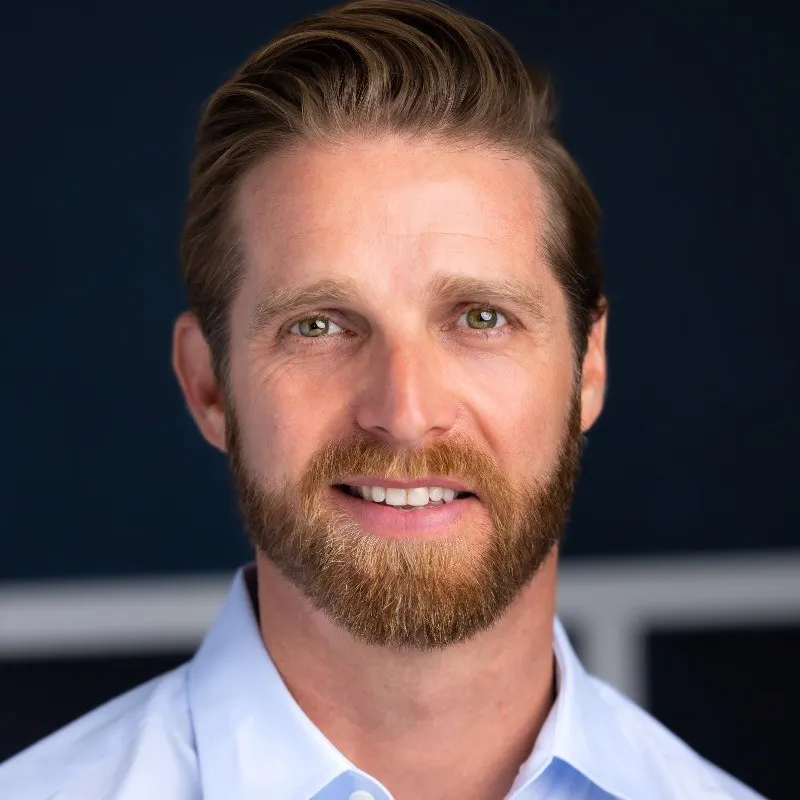
Steve Bailey
CFO, Match Group
First CFO Position: 2025
Notable previous employers:
- Dow Jones
- Heritage Building Group
This interview has been edited for brevity and clarity.
ADAM ZAKI: You came up through over a decade in FP&A and probably had moments where you thought, “If I were the CFO, I’d do this.” Now that you’re in the seat, how has your perspective on finance’s role changed?
STEVE BAILEY: I think a real strength of mine is the fact that I moved up through the ranks over more than a decade, and I got to experience how the company operates deep in the bowels of the organization. Being a partner to the Match.com CEO was my first job running FP&A, and I got to learn all aspects of the business.
So really, my superpower is that I know the business inside and out. I don’t just know finance, I know how the business operates and runs, and I can bring that perspective to the decisions the CFO has to make. One area where that shows up the most is resource allocation.
A complexity about Match Group is that we’re a portfolio of brands; we’re not just one product. So a lot of what I do is help decide, alongside the CEO and the CRO, how to best allocate capital. For example, we have roughly a $600 million marketing budget, and we have to determine which brands get the funds and how that money gets spent.
We’ve rolled out a framework called PRISM that provides a standardized measurement of ROI across the brands. I’m able to apply that in a thoughtful and effective way because of the institutional knowledge I’ve built by moving up through the ranks over the last decade.
You’re managing capital across brands that are all at different stages of development, which I imagine comes with turning down good ideas in areas like marketing pretty often. How do you and your fellow leaders make those calls, alongside PRISM, with short-term and long-term goals in mind?
It’s complicated and important to get right because there are a lot of great ideas and everyone wants funding, whether that’s marketing, product innovation or expanding into a new geography. I do have to say no sometimes. We try to balance investing to drive growth today while also planting seeds that may not pay off next quarter but could matter a year or two down the road. It takes time to build a brand, scale a team or launch a new product, so we try to keep that longer-term perspective in mind.
“Providing broader context has helped teams better understand the tradeoffs and has gone a long way toward alignment.”

-Steve Bailey
CFO, Match Group
When I became CFO, the first thing I did was take a hard look at the cost base. In 2025, we went through a major reorganization, reducing the company by about 13% and removing layers of management while slimming down corporate teams in particular. We also launched alternative payments outside the App Store, which should save us more than $100 million in fees in 2026. The goal wasn’t just to cut costs; it was to create flexibility so we could keep investing where we see the biggest opportunities.
Instead of letting those savings fall straight to the bottom line, we’re reinvesting into growth, mainly at Tinder and Hinge, while still maintaining margins above 37% and strong free cash flow. That balance between discipline and reinvestment has really shaped how we think about capital allocation today.
Another change has been around transparency. Planning used to be more siloed, with each brand focused on its own strategy and visibility limited to the executive team. Now we walk brand CEOs through the full roll-up at the end of the planning process, show them how everything fits together at the Match Group level, how it compares to investor expectations and why certain investments move forward while others don’t. Providing a broader context has helped teams better understand the tradeoffs and has gone a long way toward alignment.
With AI deepfakes and fraud risks rising, how are you thinking about trust and safety investments, including Know Your Customer Technology, and what that looks like over the next few years?
For us, and really for the category as a whole, this is table stakes. It’s not only the right thing to do, it’s necessary for us to succeed because users expect to feel safe on the platform. They don’t want to be dealing with bots or spam, and they want to know the people they’re meeting are authentic. That’s hugely important and it’s one of the barriers for people who haven’t tried online dating yet.
We’ve invested hundreds of millions of dollars in this area over the past several years and we’re continuing to invest more today. AI introduces new considerations, but it’s also helping us improve detection and prevention. We’re using AI tools behind the scenes for things like bot detection and spam detection, which has made a big difference.
One example is a feature we recently rolled out called Face Check. It’s helped reduce interactions with bots and spam by around 50%. Historically, we might catch 95% of bad actors within the first 24 hours, but even that short window can leave users with a negative experience. Now we’re trying to stop those profiles before they ever get in the front door through facial recognition that verifies authenticity. We’re rolling that out globally now and it’s been a big win.
Our size and scale give us a competitive advantage here. Smaller startups often struggle to invest at this level or manage the patchwork of global regulations. Sometimes we acquire smaller apps that have great potential but can’t meet those hurdles on their own, and we bring them onto our platform so they can leverage those trust and safety capabilities.
Where are you seeing real ROI from AI inside the finance function, and how are you deciding which tools are worth scaling?
In finance, I would say we’re testing and piloting a lot. We’ve found a couple of wins, one example is in tax. We operate in about 160 countries, and we have to comply with VAT regulations that change frequently.
“Many tools are interesting, but a lot of them still aren’t quite ready for prime time in finance.”
-Steve Bailey
CFO, Match Group
Historically, someone on the tax team had to manually track those updates and maintain a database that our systems relied on to apply the correct rates. Now we have AI tools that can monitor those regulatory changes and update tax rates globally in real time, which removes a lot of manual work. That’s one small example.
We’re also seeing early progress in accounting. We’re piloting a program on the accounts payable side, but it’s still early days. In 2025, we basically told teams to experiment, streamline approvals and try new tools. We didn’t hold the purse strings too tightly because we wanted to learn quickly.
What we found was that teams were piloting dozens of tools across the organization, not just within finance, and the automation benefits weren’t always there. AI tool spending reached around $4 million to $5 million last year, which starts to become material. So now we’re setting a higher bar.
It’s no longer an unlimited budget. We still want to stay on the cutting edge, but we want a clear business case that outlines expected efficiency gains or cost savings before we scale anything. Then we measure the results and decide whether to expand further. Many tools are interesting, but a lot of them still aren’t quite ready for prime time in finance.
You’ve talked about shifting toward new engagement metrics alongside traditional finance measures. Are there any combinations of metrics you track that other CFOs might find interesting?
I have really focused on taking a pretty long-term view of the business. One challenge of being a public company CFO, however, is the quarterly pressure, which can push you toward short-term decisions. Our CEO has done a good job setting the tone that we’re focused on creating shareholder value two to three years down the road, not just next quarter. That’s easier said than done, but we’ve tried to stay consistent with that approach.
Historically, we focused heavily on monetization metrics like payers and revenue per payer. Those were important, and the business performed well, but we didn’t put enough emphasis on product innovation, particularly at Tinder, which led to slowing user growth. Now we’re shifting toward metrics tied more closely to outcomes and long-term engagement.
We’ve introduced a metric we call “sparks,” which measures meaningful conversations on the platform. It’s a proxy for real connections that are more likely to lead to dates or relationships. Over the past year sparks coverage, which tracks the percentage of users in at least one meaningful conversation each week, has increased by about 4% year over year.
What we’ve seen in the data is that improving sparks leads to stronger retention and better word-of-mouth growth, which ultimately drives user growth and sets up more sustainable revenue performance over time. That’s really how we’re thinking about balancing product health with financial outcomes.
In markets like Japan, where declining birth rates are becoming a major issue, is that trend a headwind or a tailwind for apps like Pairs, and what is Match Group’s role in addressing this global problem?
There are definitely challenges in markets like Japan, but there are also tailwinds. The government is very aware of the birth rate issues, and in some cases, local governments are working directly with Pairs through subsidies or public awareness efforts to help address the problem. The government is on our side there, and that support has helped the category overall.
One example is advertising. Historically, dating apps weren’t allowed to advertise on television in Japan. That changed in 2023, partly because of the broader birth rate challenge, and Pairs was the first to move into TV advertising. That expanded reach into new audiences and helped stabilize the business and the category there.
Longer term, you’re seeing similar demographic trends globally, not just in Japan. South Korea is another example, and even in the U.S., you’re seeing slower birth rates and what some call a rising loneliness epidemic.
That’s where our brands come in. We’re trying to build products that address a real societal need. Gen Z in particular is comfortable using technology to solve everyday challenges, whether it’s transportation, food delivery or meeting new people. Our focus is on building the right product experiences for them. Hinge has done a strong job of that, and part of our work now is helping Tinder evolve to better serve its audience and return the category to growth.