For many finance leaders, the idea of becoming a sports CFO carries a distinct appeal. The product is visible, the mission feels tangible and the proximity to athletes and fans creates a sense of relevance that few corporate roles can replicate.
The position sits at the intersection of finance, competition and culture, and for CFOs who grew up playing or watching sports, it can feel like a natural and fun career trajectory. However, sports CFOs operate in environments where deadlines are not flexible, financial decisions intersect with public perception and organizational priorities are influenced by competitive cycles, capital structures and fan expectations.
The role demands technical rigor and fluency in live-event economics, digital media, capital markets and consumer behavior. Across conversations with business leaders working in sports, a consistent theme emerges: The sports CFO role is becoming more professionalized and more strategic as the industry itself continues to evolve.
The expanding scope of sports finance leadership
Angela Ruggiero, a former Olympic gold medalist and co-founder of Sports Innovation Lab describes sports as an industry that has undergone structural change over the past decade, with implications for how finance leaders operate within it.
She said ownership groups have become more sophisticated, private equity has become more prevalent and sports organizations are increasingly viewed through an investment lens. “The industry as a whole has undergone a pretty big shift,” Ruggiero said. “Private equity has come in, ownership groups are more sophisticated and sports is being viewed as an investment, not just a vanity play.”
“When you start with, ‘I’m a fan of the team,’ as your No.1 selling point, I always tell young kids and other professionals, don’t say that… you’re there to do a job. You’re there to help run the company, make it better, drive great ROI for investors.”

Angela Ruggiero
Former Olympian gold medalist, co-founder of Sports Innovation Lab
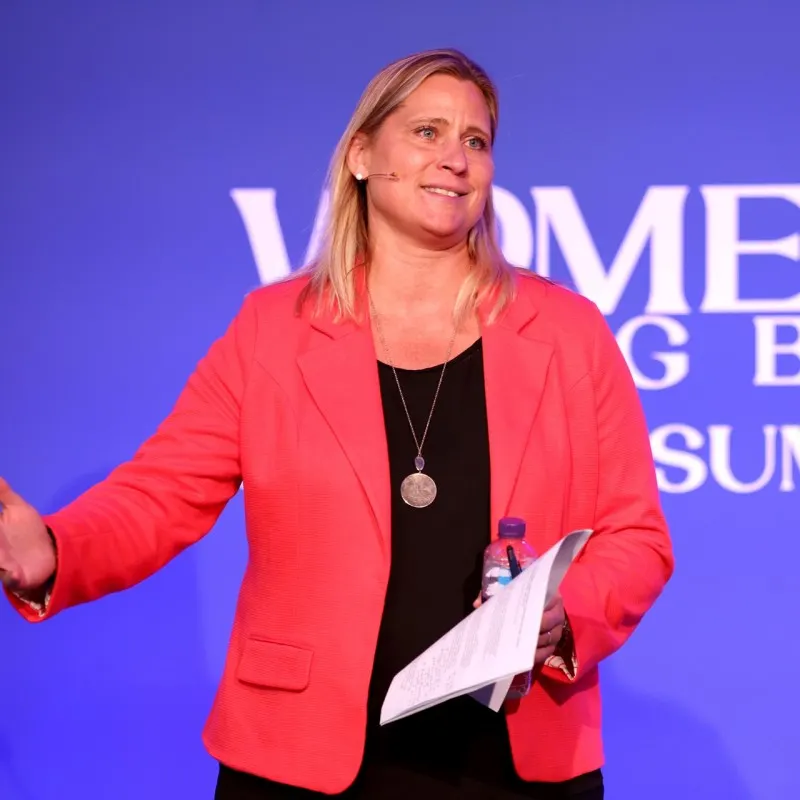
As that shift unfolds, she sees the CFO role evolving in tandem. “The professionalization from the consumer perspective and the capital perspective has made a CFO’s job even more important,” she said. Ruggiero emphasizes that finance leaders in sports are expected to bring capabilities that extend beyond traditional industry boundaries. “It’s really taking a professional skill set outside the industry, particularly in digital, and applying it to sports,” she said.
Ruggiero also challenges assumptions about what qualifies someone to work in sports. “When you start with, ‘I’m a fan of the team,’ as your number one selling point, I always tell young kids and other professionals, don’t say that,” she said. “You’re there to do a job. You’re there to help run the company, make it better, drive great ROI for investors.” In her view, professional discipline defines the role. “Business comes first. Passion should be parallel to it, but should never surpass it,” she said.
Jason Hershman, CEO of sports-focused fractional CFO firm Point, frames the evolution of the sports CFO role in terms of organizational complexity and institutional relationships. Working across teams, leagues and sports businesses, he sees finance leaders operating in environments shaped by multiple stakeholders and long-term governance structures. “Sports CFOs are operating in an ecosystem, not just a company,” Hershman said. “You’re dealing with leagues, stadiums, municipalities, sponsors, investors and fans at the same time. That changes the nature of the job.”
Hershman also links that complexity to patterns in CFO tenure. “The people who last in sports are the ones who combine competence with genuine passion,” he said. “They’ve built strong skill sets in the private sector, and when they come into sports, they’re able to apply those skills to something they actually care about. That creates a level of trust that’s hard to replicate.”
Over time, he said that trust becomes a form of institutional capital. “In sports, the CFO isn’t just managing finance,” he said. “They’re managing relationships, long-term credibility and institutional memory of the business.”
Working in environments shaped by uncertainty and scale
The scope of the sports CFO role is most visible for those who have worked in environments where uncertainty is part of doing business. For Kelly Mahncke, CFO of USA Hockey, the upcoming Winter Olympic Games offer a clear example of how sports finance differs from traditional corporate planning. “The Olympics are a hard deadline that can’t be moved,” Mahncke said. “There are no extensions, and the stakes are high.”
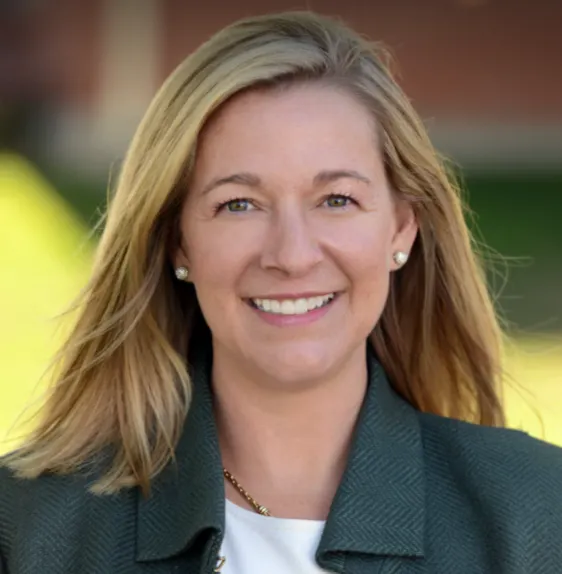
From a financial perspective, readiness goes far beyond annual budgeting and strong forecasts. “We need to maintain adequate liquidity, scenario-based budgeting and risk buffers to enable real-time decision-making,” Mahncke said. Operational considerations extend into logistics, travel, housing and supply chains, each of which must be coordinated in advance while remaining flexible enough to respond to evolving conditions. “There is so much that goes on behind the scenes to participate and win at the Olympics,” she said.
Hershman sees similar dynamics across professional sports organizations, even outside global events. “People think the job is about players and tickets,” he said. “But at higher levels, you’re dealing with stadium deals, league economics, municipal partnerships and tax structures that most corporate CFOs never touch.” Those responsibilities often surface in negotiations and governance processes that shape the long-term financial trajectory of teams and leagues.
At the Savannah Bananas, Dr. Tim Naddy, vice president of finance for the now-professional baseball team, reflects another dimension of uncertainty: managing rapid growth and operational experimentation all at once. He describes finance as embedded within the organization’s decision-making rather than operating as a downstream function. “This is literally one of those things where you’re building a plane while you’re flying it,” Naddy said. “Finance has to be in lockstep with operations.”
“In traditional companies, you optimize around margins, growth and capital structure. In sports, you’re optimizing around those things plus culture, fan trust and long-term brand equity.”
Jason Hershman
Founder and fractional CFO, Point
Naddy organizes the Bananas’ business around the distinction between the live show and the infrastructure that supports it. “If it’s a show, that is our priority,” he said. “Live events are the thing that spins our flywheel.” That framework guides financial priorities across the organization, from merchandise forecasting to media investments. “As the flywheel is spinning, what are the smaller flywheels around it that we can keep spinning with that momentum?” he said.
The financial complexity of sports organizations also extends into areas that are rarely visible externally. With a traveling workforce, multi-state payroll tax obligations require constant monitoring and coordination with advisers, and Mahncke highlights similar tradeoffs in resource allocation. “When resources are limited, leadership has to make tough decisions and prioritize needs,” she said. “Sometimes that means raising funds or reallocating from other areas.”
Ruggiero argues that these decisions reflect a broader shift in how sports organizations think about growth and investment. “The most savvy CFOs are the ones who understand how to advise leadership on where to invest,” she said. “Sports is shifting from sport to entertainment, and thriving in the attention economy. CFOs who want to work in this industry have to understand that shift.”
Hershman, in agreement with Ruggiero, framed the challenge in terms of financial optimization. “In traditional companies, you optimize around margins, growth and capital structure,” he said. “In sports, you’re optimizing around those things plus culture, fan trust and long-term brand equity.”
Private equity and the changing economics of ownership
Private equity’s growing presence in sports has reshaped how finance leaders work around the industry’s economics. Ownership groups of sports organizations are increasingly structured around investor models over legacy stewardship, and that shift has altered expectations for CFOs across leagues and organizations.
Ruggiero describes this transformation as a defining feature of modern sports governance. “The professionalization from the capital perspective has made the CFO role even more critical,” she said. “You’re not just managing a budget anymore. You’re helping leadership understand how investments in talent, technology, media and fan engagement translate into long-term enterprise value.”

Hershman sees the implications of private equity most clearly in how sports assets function within broader portfolios. “For a lot of private equity firms, sports teams are not just financial assets,” he said. “They’re strategic assets, branding vehicles and, frankly, vanity plays for portfolio companies.” That reality changes how CFOs frame financial decisions, because returns are measured not only in cash flow and valuation multiples but also in visibility, influence and long-term brand equity.
In that environment, the CFO’s mandate expands beyond traditional financial metrics. “In most portfolio companies, the CFO is optimizing EBITDA, capital efficiency and exit timelines,” Hershman said. “In sports, you’re doing that while also supporting an ownership vision that isn’t purely financial.” As a result, sports CFOs often operate in organizations where financial discipline coexists with ambitions that are not easily quantified in spreadsheets.
Hershman also links private equity’s influence to the expanding scope of the sports CFO role. “Sports CFOs are operating in an ecosystem, not just a company,” he said. “You’re dealing with leagues, stadiums, municipalities, sponsors, investors and fans at the same time.”He explained how in that ecosystem, private equity capital amplifies expectations for governance, transparency and strategic clarity, while reinforcing the reality that sports organizations increasingly function as complex investment platforms.
Skills, mindset and leadership in sports finance
When asked what differentiates successful leaders in sports finance, Ruggiero points to alignment between personal motivation and professional responsibility. “Are you doing something you actually enjoy?” she said. “If you’re aligned, you’re going to put in the extra reps.” She also emphasizes preparation as a recurring theme among high-performing leaders. “The most successful people put in the work,” she said. “They study, they network with purpose, they’re intentional.”
Confidence plays a role in how leaders navigate complex environments. “They raise their hand for opportunities even if they’re not fully qualified,” Ruggiero said. “They believe they’ll figure it out.” For Hershman, those traits are amplified in sports because finance leaders operate at the intersection of strategy and visibility. “The people who succeed in sports are the ones who understand that it’s not just finance,” he said. “It’s relationships, strategy, capital and culture all at once.”

Mahncke describes a similar breadth of responsibility within nonprofit sports organizations. “You have to understand every facet of the business, not just the finances,” she said. Naddy expresses the same idea through a practical lens. “You’ve got to love the numbers,” he said. “But you’ve also got to understand the show.”
Naddy also views finance as a tool for building capability inside sports organizations. He recently led a financial education program designed to help players understand the economic realities of their careers. “I want them to know what it means to be a professional athlete,” Naddy said. “How are you different than everybody else in the corporate world?”
The program covers taxes, cash flow and long-term planning, with a focus on preparing players for life after sports. “Eventually, you’re going to hang up the cleats,” he said. “I want to make sure they’re prepared for what comes next.” For Naddy, that work reflects a broader shift in the CFO role in sports, where finance leaders shape not only organizational strategy but also how athletes understand money, risk and opportunity. “These guys are, in and of themselves, their own businesses. We should help them however we can,” he said.