In the world of networking, CFOs are confronting a volume problem that mirrors the evolution of their own role: An explosion of conversations, limited time and growing uncertainty about which spaces actually deliver value.
As a result, networking has shifted from a professional accessory and a way to get out of the office to operational infrastructure, a requirement for finance leaders trying to stay ahead of accelerating technological change and strategic complexity.
While career advice and opportunities to benchmark compensation still matter, many finance leaders, according to the event planners themselves, are now searching for frameworks to interpret volatility, places to test strategic thinking and environments where they can speak candidly about pressures that are difficult to articulate inside their own companies.
As the CFO mandate expands into technology, talent, risk and enterprise strategy, the architecture of CFO networking is changing with it. Communities that once thrived on scale and visibility are being evaluated through a more pragmatic lens. Their members are increasingly asking not who is in the room, but why entering the room is worth their time.
The economics of CFO attention
In recent years, driven by new technology and rising advertising costs, business-to-business marketing, much of it aimed at financial decision makers, has moved beyond trade publications and industry events into mainstream visibility. Enterprise software brands now sponsor major venues, professional athletes and run viral advertising campaigns, signaling how valuable the CFO audience has become.
Because of this, given the sponsorship-driven business model at some of these organizations, CFO networking now requires a discipline similar to the type needed for proper capital allocation within the business. Every invitation to join a community, attend an event or participate in a forum requires a more selective approach to engagement, where relevance, credibility and authentic substance outweigh high-value speaker recognition, audience size or happy hours.
According to the organizers, a mix of utility and emotional support is what separates meaningful communities from the noise.“The power of networking and community is threefold,” said Chris Argent, founder of Generation CFO, colloquially known as GenCFO, a U.K.-based CFO community group with aims to expand to the U.S. in 2026. “It is about learning. It is about expanding your network for opportunities. And it is therapy.”
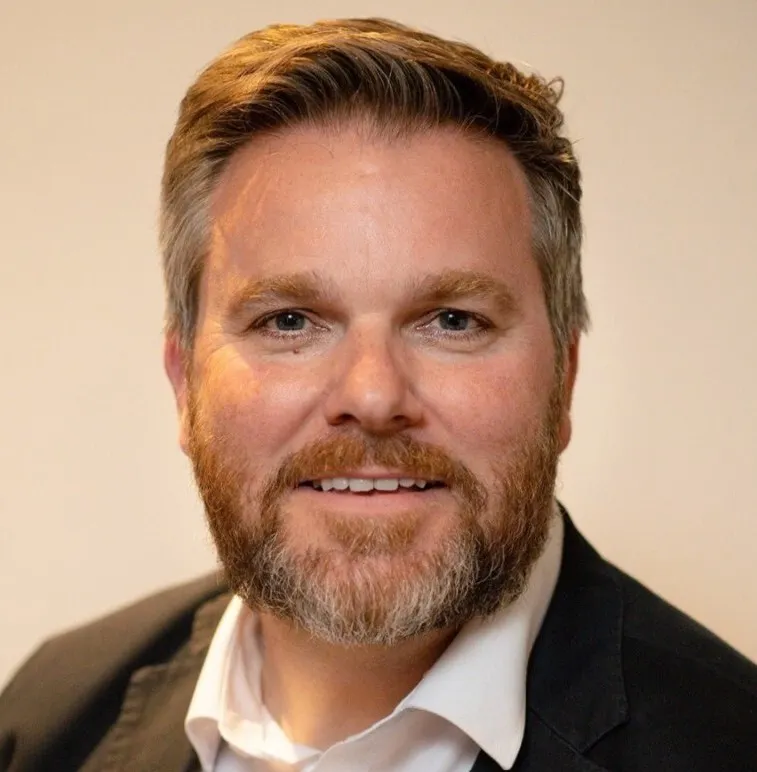
He described peer communities as one of the few environments where finance leaders can openly discuss the pressures of leadership without organizational constraints. “There are very few places where you can go and say, ‘I am a senior leader in finance’, and people will lean in and understand,” he said. “You cannot talk to your team about it. You cannot always talk to your partner about it. But you can talk to peers.”
The expansion of the CFO role has intensified competition for CFO attention and reshaped how communities position themselves. “The CFO job has changed so much,” said Jack McCullough, president of the CFO Leadership Council. “It is no longer just a really good accountant. It is a strategic driver and decision maker internally and externally.”
As CFOs become central to enterprise decision making, he argued, they have become a primary target for vendors seeking influence inside organizations. “Companies cannot just hire salespeople in every major city and think that is going to reach CFOs anymore,” he said. “So, they are setting up communities as a way to get closer to them.”
CFOs are recalibrating what networking needs to deliver, and the hosts say that process must take into consideration the value of peer insight. “There is no greater source of competency, capability and confidence building than tapping into the insights and candor of peers,” said Nick Araco Jr., founder and CEO of the CFO Alliance, a mid-market centric CFO community. “This community does not view asking a peer, ‘What are you seeing that I am not?’ as a source of weakness. They view it as a source of strength.”
In his view, CFOs are increasingly prioritizing environments that deliver practical insight rather than generic content and opportunities to share drinks and catch up. “We believe there is power in vulnerability when it is paired with experience,” he said. “That is where real learning happens.”
Navigating the rise of vendor-led communities
As commercial interest in CFO audiences grows, finance leaders are becoming more adept at distinguishing between peer-driven dialogue and marketing-driven engagement.
“Occasionally you get one of these groups where all I can think is they must think CFOs are stupid…you are not even really hiding the fact that you are trying to sell to them.”

Jack McCullough
President, CFO Leadership Council
He argued that the most effective vendor communities are those that respect CFO intelligence and transparency, while acknowledging that their purpose differs fundamentally from peer-led networks. “Most of them are respectful,” he said. “But they are different propositions.”

Within peer-led organizations, autonomy and member control are central to credibility. “With us, if you ask the CFOs who are running the show, they will tell you that they are,” McCullough said, describing how chapters within the CFO Leadership Council shape content and priorities through CFO advisory boards. “They pick the speakers. They pick the topics. There is true autonomy for our chapter members.”
Argent drew a similar distinction between transactional and authentic communities. Vendor-led forums can offer tangible learning outcomes, particularly around technology or tools, but they do not replicate the depth of candid peer conversation. “What we do is much more intangible,” he said. “It is about treating leaders as humans and unlocking conversations you would not otherwise have.”
He added that informal environments often generate the most meaningful insights precisely because they remove the pressure to perform or promote. “Do not confuse informality with unprofessionalism,” he said. “We are just creating space for real conversations.”
Araco emphasized that trust is the defining currency of peer communities. CFO Alliance intentionally avoids traditional sponsorship models to preserve candor and credibility. “Our job is to create a safe place,” he said. “People are willing to say, here is my tool, use my resource, use my voice.”
He argued that CFOs increasingly value communities where vulnerability is not only allowed but expected. “They do not see peer dialogue as optional anymore,” Araco said. “They see it as essential.”
As CFO communities proliferate, control of the conversation has become a proxy for legitimacy among these groups. They know their members are gravitating toward networks where peer dialogue is protected from commercial distortion, signaling a broader shift toward community governance models that prioritize autonomy and authenticity over scale and hype.
From scale to structure
Virtual programming has transformed CFO networking, but its impact has been more structural. Instead of replacing in-person interaction, digital platforms have enabled CFO communities to develop layered experiences that offer scale while still supporting meaningful, relevant exchange.
“Virtual is a learning environment. In-person is a relationship environment.”
Chris Argent
Founder, Generation CFO
“They are critical,” McCullough said of virtual events, noting that his organization hosts dozens of webinars annually alongside smaller virtual peer groups organized by industry, company type and career stage. “We have small events that only get four or five people every time,” he said. “But those who attend love it. They say that is the best hour they spend that month.”
McCullough described groups where CFOs exchange insights on shared challenges without external agendas. “They do not want speakers,” he said. “They just want to talk.”
Argent highlighted the complementary roles of virtual and in-person networking. Virtual events enable structured learning and targeted knowledge sharing, while in-person interactions foster deeper relational capital. “You cannot turn to the person beside you and say ‘what did you think about that point’ in a virtual event,” he said. “That conversation is intangible but powerful.”
In his view, CFO communities must intentionally design experiences that leverage the strengths of both formats rather than treating them as interchangeable. “Virtual is a learning environment,” he said. “In-person is a relationship environment.”

Araco argued that the future of CFO networking lies in this multi-layered integration of different experiences. He said communities must connect insights generated in small groups with broader networks rather than isolating conversations within discrete formats. “We want to meet finance leaders where they are,” he said. “We want to convene around issues and make those insights available to the broader community.”
He described CFO Alliance’s approach as building connected communities rather than the compartmentalized chapter model done by the CFOLC. “We do not believe in disparate meetups,” he said. “We believe in a shared conversation that evolves.”
Argent said building a genuine peer community is fundamentally different from running a structured, content-driven program. “What we do is actually really hard,” he said. “It’s hard to get people to come together socially and have agenda-less conversations. You can’t say, come and learn about my new AI tool and make it tangible. What we do is much more intangible, but that’s the beauty of it.”
McCullough argued that the strength of his model lies in its ability to create multiple entry points for CFOs to engage at different levels of relevance and urgency. Rather than relying on a single format, he said the chapter structure is designed to surface meaningful dialogue by organizing communities around shared context and experience. “We organize groups by location, industry, company type and career stage,” he said. “That’s where the real conversations happen.”