When Gov. Kathy Hochul signed the 120-hours plus two years of experience CPA pathway into law on Nov. 21, New York set in motion its most significant licensure change in more than a decade. The new option keeps the 150-hour route fully intact but gives candidates a second way to qualify, addressing long-standing concerns about cost, access and the shrinking number of students entering the profession.
Supporters say the additional pathway can help people start working sooner and remove a financial barrier that has discouraged many from pursuing the CPA. Critics worry it could weaken standards, even though many of today’s partners and CFOs earned their license under a 120-hour model before the 150-hour requirement became widespread around 2015.
To understand how the policy came together and what it means for accounting firms, the CPAs working in them and finance chiefs alike, CFO.com spoke with New York State Society of CPAs CEO Calvin Harris Jr. In the interview, he discussed how lawmakers were convinced to make the change, how firms may respond to candidates on different pathways and why the profession still needs to do more to support CFOs who are letting their CPA credentials lapse.
Calvin Harris Jr.
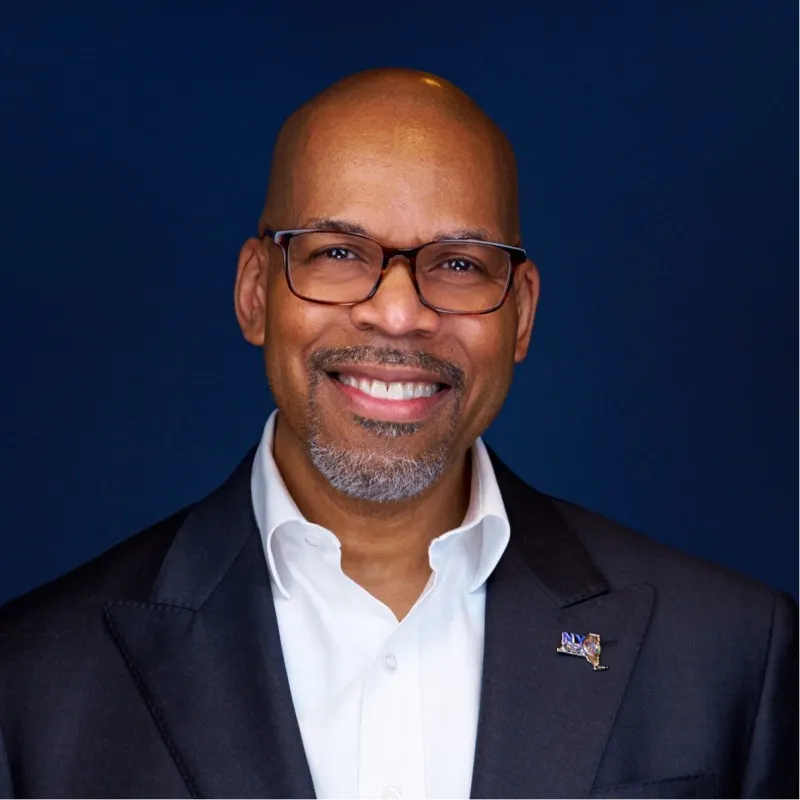
CEO, New York State Society of CPAs
First CFO Position: 2007
Notable previous positions:
- Senior vice president and CFO, National Urban League
- Vice president for administration/finance and CFO, Baltimore City Community College
- Chairman of the board and national president, National Association of Black Accountants
- CFO, Aeras Global TB Vaccine Foundation
This interview has been edited for brevity and clarity.
ADAM ZAKI: You built the coalition, made the case and got this over the finish line. But how did you sell lawmakers on now being the time to do this? What did they need to hear to move forward?
CALVIN HARRIS: First, nothing in this legislation removes the 150-hour pathway. That mattered to lawmakers who support it. The existing model stays intact.
The access issue also carried weight. That extra year of school is a real financial challenge for many people because they are paying for tuition while giving up a year of income. The 120-hour pathway removes that barrier. Anyone who wants to pursue a master’s degree or stay on the 150-hour route can still do that. This simply gives people a choice.
There is also a historical element. Many leaders in the profession, including me, earned the CPA through a 120-hour model. For people who know that history, this does not feel like a major shift. It is closer to the structure that produced the partners and CFOs working today.
And people liked the idea that this lets candidates start working sooner. Entering the workforce earlier means contributing value to employers and communities earlier. When you combine all of that, it is easy to see why the legislation passed unanimously in the Assembly and with only two no votes in the Senate. There was something in it for everyone.
As the accounting job market starts to fill with both 120-hour and 150-hour pathway students, do you think firms will value one group more than the other?
I do not expect one pathway to be favored over the other. People can still pursue a master’s degree if they want to strengthen their resume. Whether it is an MBA, a master of accounting or a master of taxation, those options remain available.
“This [120-hour] pathway alone will not solve pay or burnout, but it does support the broader effort. If someone enters the workforce sooner, they can increase their earning power sooner. That helps people feel more stable earlier in their career and can support retention over time.”

Calvin Harris Jr.
CEO, NYCPA
In one of my CFO roles, the organization wanted someone with a master’s degree. I did not have a master’s, but I did have a CPA, and they considered that equivalent. That experience shaped how I view the credential.
I have not seen data suggesting that 150-hour candidates will automatically be viewed as more valuable than people who choose the 120 plus two years of experience pathway. There will always be certain careers where someone may want a master’s to stand out, but this legislation does not take that option away. Both routes lead to the same credential, and I expect employers to focus on skills and experience.
How will you track how this moves the needle? Is it mainly CPA program enrollment, or are there other metrics you will use to evaluate the impact?
Right now, the focus is on enrollments. There’s a lot of recent data showing some increases in accounting program enrollment, which is encouraging. There are many factors influencing the pipeline, so no single data point explains everything.
Over time, as people move through the 120 plus two years of experience pathway, the 150-hour pathway and the other pathways available in New York, we will see which options candidates choose and how those choices play out in the workforce. That will take a few years because we need enough people in each path to study the differences.
There are long-standing issues in accounting around pay, workload and burnout. Does this change affect those problems, and if not, are there plans to address them separately?
These challenges exist across the profession in both public accounting and industry. People often talk about the pipeline only in terms of who enters, but we also need to focus on who stays.
The profession has made progress on pay and workload, but we still have more work to do. The pandemic showed that there are many ways people can work. Remote, hybrid and other models opened new possibilities, and the profession has adapted, but we still need to improve working conditions.
This pathway alone will not solve pay or burnout, but it does support the broader effort. If someone enters the workforce sooner, they can increase their earning power sooner. That helps people feel more stable earlier in their career and can support retention over time.
With the new two-year experience requirement under the 120-hour pathway, how do you make sure that experience is consistent across different types of firms?
I do not expect much to change. New York’s Board of Accountancy does strong work on this. The foundation of the experience requirement is the same as it has always been. You must work under the supervision of a licensed CPA. That is what keeps the experience consistent.
Whether someone is at a multinational firm, a regional firm, a small practice or in industry, they are still working under a CPA who is responsible for guiding them and ensuring the work meets professional standards. The only change under the 120-hour model is the length of supervised experience. It becomes two years instead of one. That is the same framework that existed when I earned my CPA.
Some states are moving forward with the new pathway, while some have still not acted yet. What challenges are you seeing around mobility, and how are you addressing them?
People need to know the exact requirements of the state where they plan to work. Even when states look similar, there are important differences. For example, New York handles the concept of holding yourself out as a CPA differently from Maryland, where I am also licensed. Someone can be in compliance in one state but run into issues in another if they do not understand the rules.
We already have about half the country, including New York, moving toward the additional pathway in 2025. I expect many more states to follow in 2026. By this time next year, most states will likely be moving in this direction. Some will move slower because state legislatures operate on different schedules, and that creates delays.
During the transition, clarity is essential. People need to check the requirements in the states they care about. State societies can help because we know the rules and can guide people so they do not make mistakes that affect their standing or mobility.
Some people strongly support the 150-hour requirement and do not want it changed universally. Have you encountered any institutional resistance, and how do you address it?
I respect anyone who went through the 150-hour pathway. It is rigorous and has produced excellent professionals. I hope people who chose that route extend the same respect to those who came through a different pathway because we are all CPAs and meet the same standards once we are licensed.
The biggest misconception is that 150 hours is being eliminated. That is not true in New York. If a state ever decided to remove it entirely, that would be a different discussion, but this legislation keeps the current model intact.
Some people worry that the change lowers standards. That does not hold up historically. Many partners at large firms and many CFOs are 120-hour CPAs because the 150-hour rule did not exist when they became licensed. The idea that 120 hours produces a lesser CPA is not supported by the careers of the people leading the profession today.
Many CPAs turned CFOs continue to let the credential lapse because they no longer see value in it. How can the profession make the credential relevant for senior finance leaders, not just young accountants?
I understand the trend. There was a short period when I let my own CPA lapse while I was working as a CFO. The historic base of the CPA is public accounting, but many CPAs work in industry now, and the incentives can vary depending on the state. In New York, for example, you need to keep it active based on how you hold yourself out.
The opportunity for the profession is to do a better job of showing that the CPA is relevant at every stage of a career. We spend a lot of time talking about young people and the pipeline, which is important, but we have not spent enough time showing the value of the CPA for senior leaders.
As a former CFO, I understand what you are hearing from people who say the credential does not feel necessary at that level. We need to communicate better that the CPA is not only useful in public accounting or early in a career. It is valuable in senior roles where people are making major decisions, managing risk and representing their organizations. The profession has work to do to strengthen that message.