The Trial Balance is CFO.com’s weekly preview of stories, stats and events to help you prepare.
Part 1 — MIT Sloan CFO Summit focuses on tech ROI and risk management
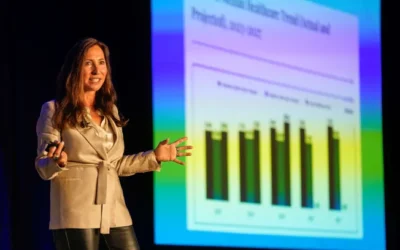
Like last year, attendees of MIT Sloan’s CFO Summit said AI dominated the event. However, similar to the sentiment expressed at the Finance and Accounting and Technology Expo earlier this month, the discussion at this year’s event between CFOs shifted toward outcomes rather than experimentation.
After the 23rd consecutive rendition of the event just outside of Boston in Newton, Massachusetts, last week, MIT Sloan Summit Executive Producer Beth Kurth told CFO.com that leaders have moved past the novelty stage with new technologies.
“Internal usage is good, figuring out a way to use AI to make a material difference in your product offering is even better,” she said in an interview. She added that buy versus build came up in almost every room, along with sharper questions about how to evaluate vendors. Kurth noted that “point solutions [are probably] not the best way to go,” a sentiment she said echoed throughout the summit.
Another theme focused on how work moves inside organizations. MIT Sloan professor Nelson Repenning outlined the gap between physical and knowledge work in his discussions, a point attendees made note of. Kurth said Repenning’s session focused on describing how in “physical work”, like a factory floor, leaders know right away when something breaks. In “knowledge work” like finance, Repenning warned that challenges might lay low for longer. Many CFOs left with the takeaway that a focus on process design can prevent those hidden stalls.
Career paths also drew attention. John Dietrich’s move from CEO of Atlas Air to CFO of FedEx stood out as an uncommon but telling example of how leadership skills can move across roles, and personified the rare occurrence when a CFO role can be an upgrade from a former CEO spot.
Risk also surfaced as a common theme at the event. During the conference, the audience was asked about black swan events, and the room pushed back on whether the term even applies any longer. Kurth said the drift of the discussion was simple. “‘What does that even mean anymore?’ Pandemic used to be just a word we added,” she said.
Now that supply chain exposure and large-scale disruptions sit permanently in risk disclosures, these events are shaping how CFOs plan for whatever is thrown their way next. For many organizations and CFOs alike, the lessons learned during the COVID-19 pandemic taught priceless lessons about risk assessment and supply chain management that are still being relied on today and for the future.
Part 2 — This week
Here’s a list of important market events slated for the week ahead.
Monday, Nov. 24 — None scheduled.
Tuesday, Nov. 25
- PPI, Sept.
- Retail sales, Sept.
- Consumer confidence, Nov.
- Pending home sales, Oct.
Wednesday, Nov. 26
- Durable orders, Sept.
- Chicago PMI, Nov.
Thursday, Nov. 27
Friday, Nov. 28 — None scheduled.
Part 3 — Weekly listen: CFO of 140-year-old Swiss Watchmaker-turned AC/DC catalog owner
Ben Edmonds, CFO of Alberts Family Office, kicked off the first episode of the Family Office Sherpa podcast by walking through how a 140-year music and media legacy turned into one of Australia’s most unique family offices.
Alberts started with a Swiss watchmaker, moved into sheet music and radio, helped launch acts like the Easybeats and AC/DC, and eventually sold most of its music catalog to BMG in 2016. Since then, the family has shifted toward a more traditional portfolio setup centered on impact investing and philanthropy.
Edmonds shared how the fifth generation now oversees a setup that includes two boards, multiple investment committees and a foundation focused on helping young Australians through music.
With a “quite large” 17-person team, Edmonds said the office runs most things in-house, relying on strong governance, outside legal partners and impact advisers to keep decisions tight and aligned with the family’s mission. A lot of the work comes down to stitching together systems and processes so reporting, data and operations actually flow.
What makes the interview interesting is how rare Edmonds’ CFO role is. Alberts sits in a niche corner of the family office world, but the challenges he talks about will feel familiar to every finance leader. Too many systems, a strong reliance on the finance-legal relationship and the constant push to make real improvements without getting buried by day-to-day work are issues any CFO can relate to, even if the backdrop here is a near one-of-a-kind legacy business.